
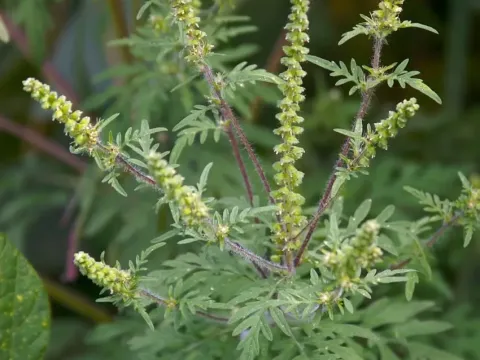
Panicle-leaf ragweed
Ambrosia paniculata
Panicle-leaf ragweed (Ambrosia paniculata) is a member of the Asteraceae family. It is an annual herbaceous plant widely recognized in agronomy as an invasive species that poses a significant challenge to global agriculture and local ecosystem health.
What the section contains
Panicle-leaf ragweed
Originally native to the Americas, this species has successfully spread across various continents. Its rapid expansion is attributed to its high phenotypic plasticity, allowing it to thrive in diverse climatic zones and successfully colonize both cultivated fields and roadside habitats.
The plant features a robust taproot system that reaches deep into the soil profile and a highly branched stem that can grow significantly in size. The leaves are typically pinnately lobed, maximizing surface area for photosynthesis, which supports rapid growth throughout the summer season.
Environmental requirements for Ambrosia paniculata include high solar radiation and warm temperatures. It prefers fertile, well-drained loamy soils but shows remarkable tolerance to a wide range of soil pH levels and moisture conditions, contributing to its status as a persistent weed.
Agricultural management requires integrated strategies, including mechanical tillage, crop rotation, and precise herbicide application. Because a single plant can produce thousands of seeds, preventing seed bank accumulation in the soil is the primary objective of effective farm management practices.
Common biological threats to this species include specialized insects such as leaf beetles, which feed on the foliage and suppress biomass accumulation. These agents are often investigated for biological control programs aimed at reducing the density of ragweed populations.
Pathogenic threats include various fungal infections, notably downy mildew and powdery mildew. These diseases can negatively impact plant health and reproductive capacity, especially in environments where humidity levels promote the spread of fungal spores among dense weed patches.