
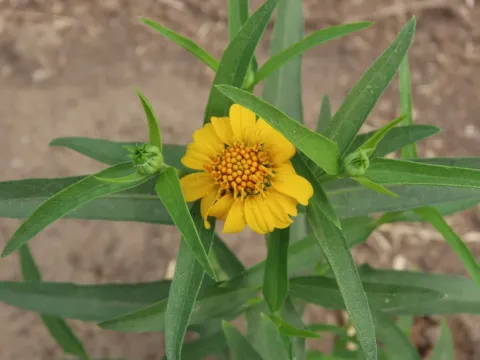
Pascalia glauca
Pascalia glauca
Pascalia glauca is a perennial herbaceous plant belonging to the Asteraceae family. In agricultural practice, it is recognized for its high adaptability to diverse growing conditions, making it a subject of interest for forage research.
What the section contains
Pascalia glauca
Native to South America, particularly Argentina and Chile, this plant thrives in a variety of environments. In its natural range, it is found both in pasture lands and on disturbed soils, displaying significant resilience to climatic stressors.
The crop prefers well-drained soils with a neutral or slightly alkaline pH. Thanks to a robust root system, the plant can withstand prolonged drought periods, which makes it a promising candidate for regions characterized by limited water availability.
For optimal development, Pascalia glauca requires intense solar exposure. In shaded areas, growth intensity significantly decreases, and the nutritional quality of the biomass drops, which limits the selection of suitable fields for sowing.
From an agrotechnical perspective, Pascalia glauca is valued for its ability to compete with weeds. Its dense clusters effectively cover the soil surface, hindering the emergence of other plants, thereby reducing the reliance on chemical herbicide treatments.
The agricultural utility of Pascalia glauca is primarily focused on green biomass production, serving as a supplementary feed source for livestock. Under specific conditions, its biomass exhibits a high concentration of essential nutrients.
Green biomass yield directly depends on stand density and the frequency of mowing. With a favorable moisture regime and adequate soil fertility, the plant is capable of producing multiple cuts throughout a single growing season.
Another key value of this culture lies in its longevity. Once established, a field can remain productive for several years without the need for annual reseeding, significantly lowering operational costs for agricultural enterprises.
Research indicates that the plant's chemical composition is stable during the pre-flowering phase. However, as generative organs mature, fiber content increases, which reduces the digestibility coefficients of the fodder for livestock.
In its regions of natural distribution, Pascalia glauca is frequently utilized as a component of natural hayfields. It withstands moderate grazing well, showing a rapid recovery of vegetative mass following animal consumption.
The primary threats to Pascalia glauca are pathogenic fungi, which thrive in high-humidity conditions. Excessive soil moisture can lead to root system decay and the development of various types of root rot.
Among pests, phytophagous insects are the most dangerous, as they damage the leaf blades during active growth periods. Controlling the population of such pests is essential to maintain the quality of the forage base and prevent plant weakening.
The early vegetative stage is a critical period for crops, as young plants are most vulnerable to soil-borne pests. Implementing a proper crop rotation strategy is recommended to minimize the infection pressure within the fields.
Under intensive cultivation, outbreaks of powdery mildew may occur, especially in dense stands. To ensure prevention, it is necessary to provide adequate air circulation between plants by adhering to recommended sowing rates.
Agronomic field monitoring is an essential practice. Early detection of disease clusters allows for effective containment, preventing widespread damage to the cultivated area.