
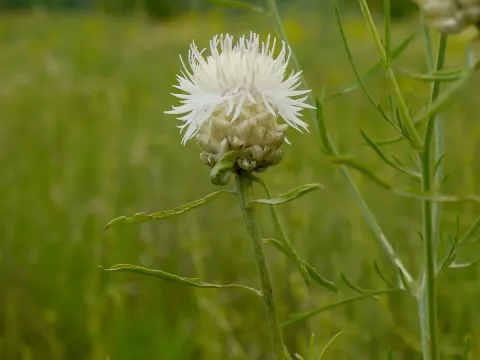
Pearly cornflower
Centaurea margaritacea
Pearly cornflower (Centaurea margaritacea) is a perennial herb belonging to the Asteraceae family, valued for its unique silver-colored inflorescences.
What the section contains
Pearly cornflower
The optimal sowing time is early spring once the threat of frost has passed and soil temperatures have warmed to at least 10 degrees Celsius.
It is recommended to stratify seeds for two weeks prior to planting to ensure a uniform emergence rate across the entire cultivated area.
Seeds should be planted at a shallow depth of 1-2 centimeters to ensure they receive enough light, which is crucial for the germination of this species.
Maintaining a row spacing of 30-40 centimeters provides ample space for the plants to develop robust root systems and simplifies mechanical weeding.
Pearly cornflower thrives in open, sun-drenched locations, requiring full sunlight exposure for at least six to eight hours per day for vigorous growth.
The plant is highly adaptable to various soil types but performs best in well-drained, slightly sandy soils that prevent moisture accumulation near the roots.
This species is notably drought-tolerant and requires minimal irrigation, making it a sustainable choice for low-maintenance garden or field cultivation.
It is important to avoid heavy, clay-rich soils that retain excessive water, as poor drainage significantly increases the risk of root-related diseases.
Providing a balanced mineral fertilizer at the start of the growing season promotes healthy foliage development and extends the flowering period.
The most common disease affecting this crop is powdery mildew, which typically appears as a white fungal growth on leaves during humid, stagnant conditions.
Root rot remains a persistent threat if the crop is planted in areas with poor drainage or during seasons with abnormally high rainfall levels.
Pests such as aphids and spider mites can occasionally target the tender growth of the plant, potentially causing stunting and loss of aesthetic value.
Integrated pest management, including regular crop monitoring and the use of eco-friendly insecticidal soaps, is effective in controlling early outbreaks.
Ensuring proper airflow between plants by thinning rows is a critical preventive measure against the rapid spread of fungal pathogens in the field.
For ornamental and florist use, the blooms should be harvested when they are partially open, which preserves their texture and color for long-term display.
Using sterilized shears for harvesting helps prevent the introduction of pathogens and encourages the plant to maintain health for future blooming cycles.
To produce high-quality dried flowers, hang bunches upside down in a dim, airy room to allow the moisture to evaporate gradually without fading the petals.
Proper drying techniques maintain the signature pearly sheen of the bracts, making the crop highly sought after for wreaths and permanent floral arrangements.
After the harvest, leave the basal foliage intact until late autumn to allow the plant to store energy in the roots for the subsequent growing season.