
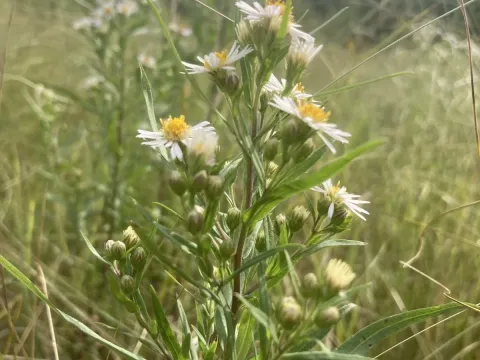
Panicled aster
Symphyotrichum lanceolatum
Propagation of Symphyotrichum lanceolatum is predominantly achieved through the division of rhizomes during the early spring or late autumn months.
What the section contains
Panicled aster
When sowing from seeds, it is recommended to provide a cold stratification period of several weeks to effectively break seed dormancy and ensure uniform germination.
The seeds should be sown in a well-prepared seedbed at a shallow depth of approximately 1 centimeter, ensuring consistent soil moisture throughout the process.
Optimal spacing between individual plants should be at least 30–40 centimeters to facilitate proper air circulation and reduce competition for soil nutrients.
Regular irrigation during the establishment phase is critical, as young plants require a stable environment to develop their root system before the heat of summer.
The panicled aster is a perennial herbaceous plant native to North America, belonging to the Asteraceae family, and known for its wide ecological adaptability.
It thrives best in locations with full sun exposure and deep, nutrient-rich soil that maintains adequate moisture levels throughout the growing season.
The species is highly tolerant of varying moisture levels but responds favorably to the application of organic amendments to improve overall soil structure.
Climatic requirements are moderate, as the plant exhibits strong cold hardiness and the ability to recover quickly from environmental stress factors.
- Requires consistent watering during dry spells.
- Benefits from occasional fertilization with balanced nutrients.
- Grows well in both clay and sandy loam soil types.
Powdery mildew represents the most significant fungal threat, particularly in humid environments where air movement is insufficient for proper drying of leaves.
Rust infections can occur periodically, resulting in visible fungal spots that reduce the photosynthetic efficiency of the affected foliage.
Insects such as aphids and leafhoppers are frequently observed, causing damage to the developing flower buds and stunted growth patterns.
Spider mites can exacerbate damage during hot, dry periods, leading to yellowing and premature dropping of the lower foliage.
Integrated pest management strategies should focus on maintaining plant health through proper spacing and prompt removal of infected plant debris.
For ornamental purposes, harvesting is conducted by cutting the flowering stalks during the peak of the blooming phase to ensure the longest vase life.
If harvesting for ecological or research purposes, collection of vegetative material is recommended during mid-summer to late summer.
Drying procedures must ensure a cool, shaded environment with constant airflow to preserve the structural integrity of the harvested plant parts.
Rhizome harvest for nursery production occurs in the late autumn, once the plant has entered its dormant state after the first light frosts.
Cleanup practices involve cutting down the stems to ground level to prevent the accumulation of fungal spores and to tidy the garden for the winter season.