
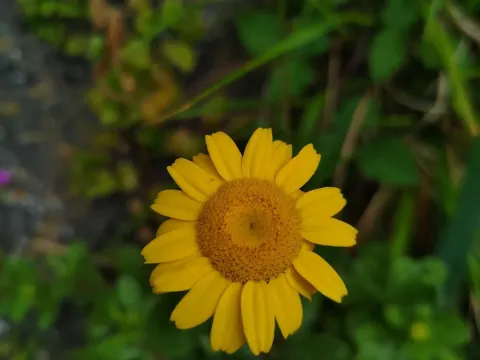
Coleostephus myconis
Coleostephus myconis
Coleostephus myconis is an annual herbaceous plant belonging to the Asteraceae family. It is recognized by its bright yellow, daisy-like flowers that bloom during the late spring and summer months.
What the section contains
Coleostephus myconis
Sowing should take place in early spring once the risk of frost has passed. Seeds are small and require a finely prepared, weed-free seedbed to ensure successful germination.
The seeds should be covered with a very light layer of soil, not exceeding 1 cm, to facilitate proper light exposure which is often necessary for the emergence of Asteraceae species.
Consistent moisture levels are critical during the germination phase, but once established, the plants show remarkable resilience to varying environmental conditions.
Field spacing should be managed to prevent overcrowding, as proper air circulation is essential to prevent the accumulation of humidity within the foliage.
Originating from the Mediterranean basin, this crop thrives in regions with mild winters and warm, sunny summers, making it highly adaptable to similar climates globally.
It prefers well-drained, neutral to slightly alkaline soils. It performs poorly in waterlogged conditions, which can lead to rapid decay of the root system.
The crop is highly valued for its drought tolerance, making it a suitable candidate for low-input agricultural systems in arid or semi-arid environments.
While it can grow in poor soils, the application of balanced organic fertilizers can significantly enhance the quantity and quality of the biomass produced.
Full sun exposure is a non-negotiable requirement for optimal development. Shaded areas lead to weak stems and significantly reduced flower production.
Harvesting usually occurs when the plants reach full maturity, which is indicated by the peak of the flowering stage when the seeds begin to develop.
Depending on the intended use, such as for seed collection or ornamental purposes, the aerial parts are cut using mechanical harvesters or manual tools.
If the goal is seed production, it is vital to wait until the flower heads begin to dry out naturally to ensure the seeds have reached physiological maturity.
Post-harvest handling requires immediate drying in a well-ventilated area to prevent mold growth, which is a common risk in the dense clusters of harvested material.
Storage should take place in a cool, dry place to maintain the viability of the seeds or the quality of the dried floral material for long-term use.