
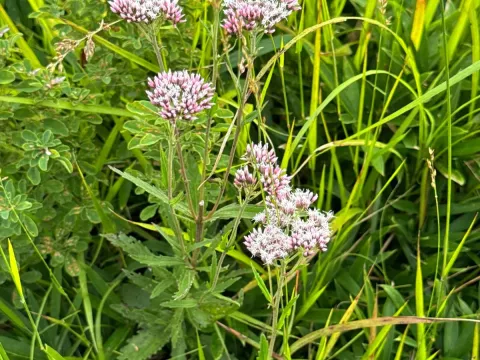
Lindley's eupatorium
Eupatorium lindleyanum
Lindley's Eupatorium is typically propagated from seeds. Sowing begins in early spring in greenhouse trays, providing the necessary warmth for uniform germination.
What the section contains
Lindley's eupatorium
The seeds are small and require surface sowing with only light coverage of fine soil or vermiculite. Consistent humidity is crucial during the initial stages of development.
Seedlings are transplanted into individual pots once the first true leaves appear, ensuring strong root development before moving them to the permanent field site.
For commercial cultivation, spacing is critical to allow for mechanical weeding and air circulation. Rows are usually set at least 50 cm apart to prevent crowding.
The field must be prepared with organic matter to ensure adequate drainage and soil fertility, as the crop requires a nutrient-rich environment for optimal biomass production.
This species thrives in moist, fertile soils with a neutral pH. It is particularly well-suited to riparian or wetland-edge environments due to its high water demand.
Sunlight exposure is essential for the plant's secondary metabolite production. While it tolerates partial shade, full sun promotes more robust growth and flowering.
Climate-wise, it prefers temperate conditions. It is relatively cold-tolerant but benefits from protective mulching in regions where winter temperatures drop significantly.
Soil moisture must be maintained throughout the growing season. In drier climates, an automated irrigation system is necessary to prevent wilting and stress.
Nutrient management focuses on nitrogen for vegetative growth early in the season, followed by balanced phosphorus and potassium to support flowering stages.
The most significant threats to Lindley's Eupatorium are fungal diseases such as powdery mildew and root rot, often induced by waterlogged soil conditions.
Aphids and mites are the most common pests. They feed on the tender tips of the plant, often causing curling of the foliage and reducing overall plant vigor.
Integrated pest management (IPM) practices should be implemented, focusing on biological controls and regular monitoring to reduce the need for synthetic chemicals.
Weed control is also vital, as the crop can struggle to compete with aggressive weeds in the early stages of establishment, potentially reducing final yields.
Good ventilation between plants is the best preventative measure against most leaf-spotting diseases that may compromise the quality of the harvested herb.
Harvesting usually occurs during the flowering stage when the concentration of medicinal compounds is at its highest. The entire aerial part is typically collected.
Stems are cut systematically to ensure the plant can recover or be easily cleared for the next season. Clean tools are essential to prevent contamination.
Drying must take place immediately after harvest. The plant material should be spread in thin layers in a shaded, well-ventilated area to preserve active compounds.
Quality control during drying involves checking for moisture levels; if the material is too damp, it may mold, rendering the harvest useless for medicinal purposes.
Final storage should be in a cool, dry, and dark environment, using breathable packaging to ensure the longevity of the herb's chemical profile.