
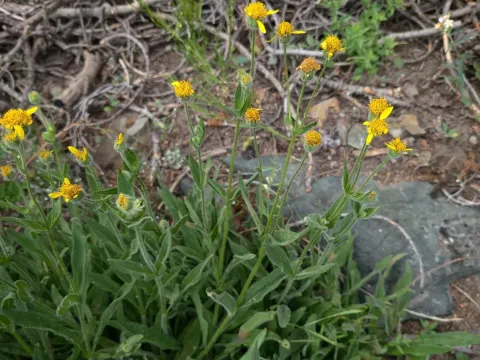
Longleaf arnica
Arnica longifolia
Longleaf arnica (Arnica longifolia) is a perennial herbaceous plant belonging to the Asteraceae family. Native to the mountain regions of North America, it is adapted to thrive in high-altitude environments, typically near stream banks and subalpine meadows.
What the section contains
Longleaf arnica
The plant is distinguished by its long, lanceolate leaves arranged in a basal rosette and its distinct yellow daisy-like flower heads. It possesses a robust rhizomatous root system, which is an evolutionary adaptation to the rocky, well-draining substrates of its native habitat.
When cultivating Longleaf arnica, the primary requirement is a cool, humid climate with stable moisture levels. The plant prefers acidic to neutral, well-drained soils; heavy, clay-based soils that retain water are detrimental and often lead to failure in establishment.
Light intensity plays a critical role in the development of Arnica longifolia. While it appreciates full sun for flower production, high-temperature regions require partial shade during midday to prevent leaf scorch and heat stress, which can severely impact the quality of the harvest.
The economic use of this plant is primarily focused on the extraction of sesquiterpene lactones and flavonoids. These compounds are highly valued in the pharmaceutical industry for their application in anti-inflammatory treatments and topical recovery formulations.
Root rot is the most significant threat to the successful cultivation of Longleaf arnica. Overwatering or poor soil drainage creates a hospitable environment for soil-borne pathogens, leading to rapid decline and mortality of the plantation.
Foliar diseases, such as powdery mildew, often appear during periods of high humidity and poor ventilation. This fungal issue can significantly reduce the photosynthetic area of the leaves, thereby limiting the accumulation of medicinal compounds within the plant tissues.
Pests such as aphids and spider mites frequently target the plant, especially in drier environments. Aphids can cause severe distortion of the developing flower buds, while spider mites cause yellowing and necrosis of the foliage.
Insects such as leaf miners and caterpillars may cause direct mechanical damage to the leaves. Monitoring programs and integrated pest management are necessary to prevent infestations from reaching economic threshold levels that would compromise the harvest.
Competitive pressure from weeds is a major concern during the early growth stages of arnica. As it is not an aggressive grower initially, regular manual or mechanical weeding is essential to ensure the young plants have adequate access to nutrients and light.