
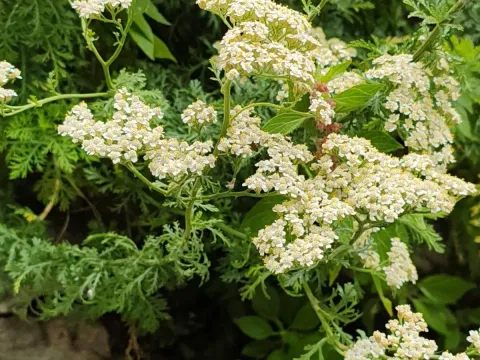
Ligurian yarrow
Achillea ligustica
Ligurian yarrow (Achillea ligustica) is a perennial herbaceous plant belonging to the Asteraceae family. Its native habitat is located in the Mediterranean basin, where it thrives in warm, dry climates and well-drained rocky soils.
What the section contains
Ligurian yarrow
Botanically, this species is distinguished by its feathery, deeply divided leaves and dense corymbs of small flower heads. The plant is rich in volatile oils, which provide a potent aromatic profile, making it a valuable crop for the pharmaceutical and cosmetic industries.
The crop is highly resilient and adapted to poor, calcareous soils. It requires full sunlight to achieve optimal growth and development, showing excellent tolerance to seasonal drought once it has been established in the field.
Cultivation practices focus on preparing well-drained soil, as the plant is sensitive to waterlogging. It does not require intensive fertilization, making it a suitable candidate for sustainable or low-input farming systems in Mediterranean-type climates.
Beyond its industrial applications, Ligurian yarrow serves as a beneficial plant for biodiversity, attracting pollinators and serving as a robust perennial component in ecological restoration projects.
Ligurian yarrow is generally robust, but it can be susceptible to fungal diseases such as powdery mildew when grown in environments with poor ventilation or consistently high humidity levels during the growing season.
Pests, particularly aphids, can infest the tender shoots and flower buds. These insects can weaken the plant and may also act as vectors for various plant viruses, necessitating regular monitoring during the active growth phase.
Root rot is a potential risk if the soil remains excessively saturated, leading to oxygen deficiency in the root zone. Ensuring excellent drainage is the most effective preventative measure against such conditions.
Implementing a proper crop rotation plan is essential to reduce the buildup of soil-borne pathogens. By alternating with non-host crops, farmers can naturally manage the risk of infection in the long term.
Integrated pest management strategies are encouraged to protect natural predator populations, such as ladybugs and lacewings, which effectively keep aphid populations below damaging thresholds.