
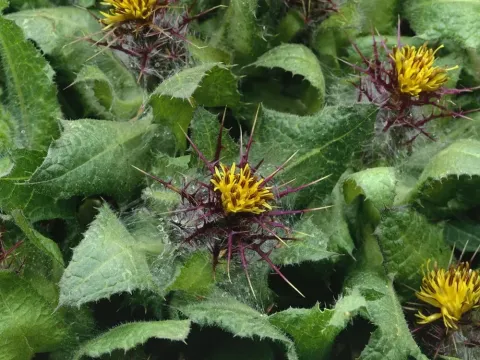
Blessed thistle
Cnicus
Blessed thistle is an annual herb from the Asteraceae family that requires specific soil preparation to ensure successful establishment of the crop.
What the section contains

Blessed thistle
Seeds are typically sown in early spring, once the soil temperature consistently reaches 10–12°C, usually in late April, to allow for optimal germination.
The planting process involves placing seeds in rows spaced about 50–60 centimeters apart, which provides sufficient room for mechanical weeding and airflow.
Seed depth should not exceed 2 centimeters, and the soil must be kept moist to encourage rapid emergence of seedlings within the first two weeks.
Proper spacing is crucial to prevent competition between plants, allowing each individual to develop a robust basal rosette before the stem elongates.
This crop thrives in sunny, open locations, as direct sunlight is necessary for the plant to accumulate its unique bitter compounds and essential oils.
Well-drained, fertile soil with a neutral to slightly alkaline pH is essential for the healthy development of the root system and overall plant vigor.
While the plant exhibits some drought tolerance, consistent moisture during the vegetative growth phase is required for maximizing leaf and flower production.
Good soil structure is vital, and heavy clay soils should be amended with organic matter to improve aeration and prevent root rot during wet seasons.
Balanced fertilization with moderate nitrogen and higher potassium levels supports both structural growth and the development of pharmacologically active metabolites.
Yields of dried Blessed Thistle herb typically range between 1.5 to 2.5 tonnes per hectare, depending on the growing conditions and soil fertility.
Maximizing yield requires intensive crop management, including regular weeding and precise water application during peak growth stages before flowering.
The time of harvest is a critical factor for yield, as the concentration of active components peaks during the period of full bloom for the crop.
Advanced farming practices and the use of high-quality seeds can push production levels towards the higher end of the expected yield range.
Proper post-harvest handling ensures that the total harvest mass retains its quality, minimizing losses due to molding or degradation of the plant material.
The crop is susceptible to various fungal pathogens, particularly powdery mildew, which can spread rapidly under high humidity and poor ventilation.
Aphids and spider mites are common pests that feed on the foliage, potentially reducing plant vigor and spreading viral diseases throughout the field.
Soil-borne larvae, such as wireworms, can damage the root systems of young plants, making pre-sowing soil assessment an important management step.
Integrated pest management strategies are recommended to keep damage below economic thresholds without relying solely on harsh chemical pesticides.
Crop rotation is essential to prevent the buildup of pathogens in the soil, and a cycle of at least three years between planting seasons is suggested.
Harvesting is performed during the full flowering stage, as this is when the secondary metabolites in the leaves and tops are at their highest concentration.
The plants are cut close to the ground, and the harvest is immediately transported to a drying facility to ensure stability and chemical preservation.
Drying must be conducted in the shade or in specialized chambers at temperatures not exceeding 45°C to preserve the integrity of the plant's active compounds.
Once dried to the correct moisture content, the herb should be milled or stored in bulk, protected from environmental moisture and direct sunlight.
Efficient harvesting techniques minimize foreign material contamination, which is a key requirement for medicinal and commercial quality standards.