
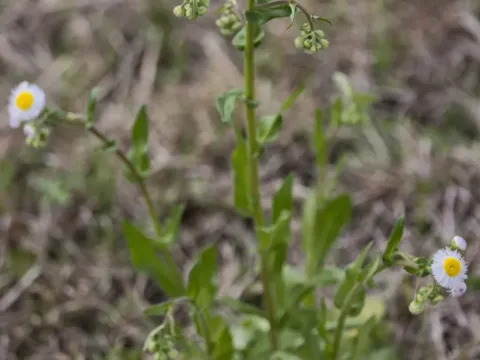
Philadelphia fleabane
Erigeron philadelphicus
Philadelphia fleabane (Erigeron philadelphicus) is a biennial or perennial herbaceous plant belonging to the Asteraceae family. It is widely recognized for its high adaptability to diverse ecological niches.
What the section contains
Philadelphia fleabane
Seeds are typically sown in early spring or late autumn. Because the seeds are tiny, they require a fine-textured seedbed and should not be covered with too much soil to ensure they get enough light for germination.
In a field or garden setting, keeping the rows clear of competitive weeds is crucial during the early stages of growth, as the plant can be slow to establish its initial rosette.
The plant demonstrates significant self-seeding capability in favorable conditions. If deliberate cultivation is the goal, managing the density of the canopy is important to ensure air circulation and reduce competition for nutrients.
Vegetative propagation via root division is also a viable method for expanding patches of this plant, ensuring genetic consistency across the planting area.
This species thrives in moist to wet habitats, including open woods, meadows, and along riverbanks. However, it adapts well to cultivated soils as long as they are not prone to extreme drought.
Full sun to partial shade is the preferred exposure. Plants grown in full sun generally exhibit a more robust habit and higher flower production compared to those in shaded environments.
The plant prefers soils that are rich in organic matter. While it is not overly demanding regarding pH, it performs best in neutral to slightly acidic environments typical of loamy soils.
Routine moisture is required throughout the growing season. While the plant can withstand short dry spells, sustained drought will reduce its height and the length of its blooming period.
Proper agricultural practices include avoiding excessive fertilization, which can cause the stems to become weak and prone to lodging, especially during windy weather.
Philadelphia fleabane is generally resilient but can be affected by aphids, which tend to congregate on the succulent growth tips and flower buds, inhibiting proper development.
Powdery mildew is the most common fungal issue, particularly when the plants are placed in areas with poor airflow. Thinning out dense patches is an effective preventive measure.
Root rot can occur if the plant is grown in compacted, poorly drained soils. Improving soil structure and ensuring proper drainage is the primary defense against these pathogens.
Leaf spot diseases may appear during seasons with prolonged rainfall. Fungicidal treatments should be considered only if the infection threatens the overall health of the planting.
Monitoring for signs of stress, such as yellowing leaves or stunted growth, allows for early intervention, ensuring the longevity and health of the population.