
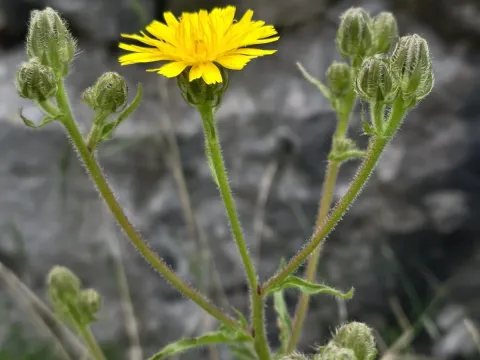
Picris hispidissima
Picris hispidissima
Picris hispidissima is a biennial or perennial herbaceous plant belonging to the Asteraceae family. Often valued for its hardiness, this species demonstrates significant resilience in various agricultural environments, particularly in semi-arid and temperate regions.
What the section contains
Picris hispidissima
The plant thrives in well-drained soils and exhibits a preference for sunny exposures, which are crucial for optimal development and biomass production. It is highly efficient at utilizing soil nutrients, making it a robust component of various natural plant communities.
Requirements for soil texture include a preference for loam and sandy-loam conditions. The plant is notably tolerant to mild drought stress due to its well-developed root system, which allows it to access deeper moisture reserves during dry spells.
Botanically, the species is distinguished by its hispid (bristly) pubescence on stems and leaves, an evolutionary adaptation that serves to minimize transpiration and provide physical protection against certain herbivores.
Standard cultivation practices involve preparation of a fine, firm seedbed. Sowing density should be calculated based on the intended use, whether for cover cropping, restoration, or forage, ensuring space for adequate development and airflow between plants.
Like many other members of the Asteraceae family, Picris hispidissima can be susceptible to powdery mildew, especially in conditions where air circulation is poor or humidity levels remain consistently high throughout the growing season.
Aphids represent a primary pest group for this plant, as they frequently cluster on the tender tips of stems and leaves. Heavy infestations can significantly inhibit growth and weaken the plant's structural integrity.
Various larvae of Lepidoptera species can cause localized damage to the foliage, which, if unchecked, reduces the photosynthetic surface area and potentially impacts the plant's overall vitality and reproductive capacity.
Stem-boring insects may compromise the plant's support system, making it more vulnerable to lodging during strong winds or heavy rainfall, which complicates mechanized harvesting processes.
Effective management strategies should focus on preventive measures, including crop rotation and maintaining adequate spacing to prevent the microclimate conditions that favor disease and pest proliferation.