
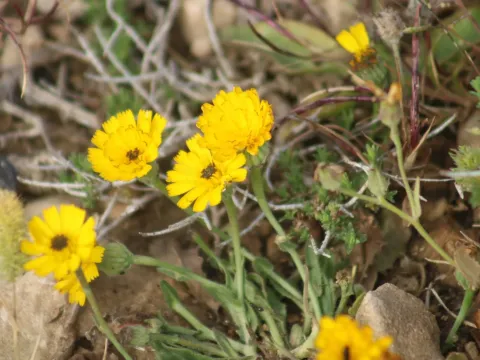
Picris amalecitana
Picris amalecitana
Picris amalecitana is a herbaceous plant belonging to the Asteraceae family, primarily native to the arid regions of the Middle East. It is not traditionally cultivated as a crop, but its biological cycles are well-documented within ecological research.
What the section contains
Picris amalecitana
The seeds of this species typically germinate during the autumn months, triggered by the first significant rainfall of the season. In agricultural settings, it can appear as a weed among winter crops, requiring early identification and management.
For successful germination, a soil temperature ranging between 12°C and 18°C is optimal. Providing consistent, though not excessive, moisture during the initial weeks is critical for the development of the primary rosette.
The planting or dispersal depth should be shallow, as the seeds require slight exposure to light for optimal emergence. In an experimental or reclamation context, sowing in late autumn is recommended to align with natural climatic cues.
The growth phase is relatively rapid, allowing the plant to complete its vegetative cycle before the onset of the intense summer drought. Early control measures are essential to prevent the plant from establishing a deep taproot.
This species thrives in high-light environments and is strictly intolerant of shade. It is perfectly adapted to desert and semi-desert conditions, making it highly resilient to extreme sunlight and heat.
Regarding soil composition, Picris amalecitana prefers well-drained, porous soils such as sandy or rocky substrates. It does not tolerate waterlogging, which often leads to root collar rot and death of the specimen.
The plant is highly drought-tolerant, utilizing its deep taproot to access groundwater. It does not require high levels of soil nutrients and can prosper in degraded soils where competitive species might struggle.
Climatic requirements are specific to the Mediterranean and Middle Eastern climate zones, characterized by mild, wet winters and long, hot, dry summers. It is not suitable for cultivation in humid or cold-temperate climates.
Management should focus on maintaining adequate spacing to ensure airflow. Proper ventilation reduces the humidity around the leaf rosette, which is a key factor in preventing fungal infections in this species.
Fungal pathogens, particularly powdery mildew, pose a significant threat during periods of unexpected high humidity. These pathogens quickly colonize the leaf surface, significantly reducing the photosynthetic capability of the plant.
Aphids are the most common pests, targeting the developing flower heads and buds. Infestation leads to stunted growth, deformed floral structures, and a marked decrease in successful seed production.
Root-feeding larvae of certain beetles can damage the main taproot, rendering the plant unstable and vulnerable to environmental stressors. Crop rotation and soil aeration are effective mitigation strategies.
Competition from more aggressive, invasive grass species can suppress Picris amalecitana. In natural ecosystems, it occupies niches with lower soil fertility where these dominant grasses are less active.
Integrated pest management, including monitoring for aphid colonization and ensuring dry surface conditions, is the best approach to maintain the health of these plants in a controlled environment.