
Petasites spurius
Petasites spurius
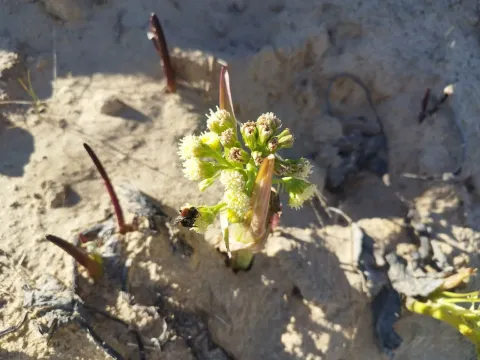
Petasites spurius, commonly known as false butterbur, is a perennial flowering plant within the Asteraceae family. It is native to temperate regions across Eurasia, where it predominantly thrives in sandy habitats, riverbanks, and dunes.
What the section contains
Petasites spurius
This species is highly regarded for its robust creeping rhizomes, which play a crucial role in binding loose soil. It is a hardy plant that shows significant resilience to cold climates, making it suitable for ecological restoration in harsh northern environments.
In terms of habitat requirements, the plant prefers well-drained, sandy or gravelly soils. While it favors moist conditions, it is capable of surviving in various light conditions, though it performs best in sunny locations where it can spread rapidly.
The biological cycle begins very early in the spring. Before the large leaves emerge, the plant produces flower stalks with clusters of small heads. This early growth period allows it to utilize available moisture before the summer heat arrives.
From a utility perspective, Petasites spurius is primarily used for land stabilization and erosion control. Its ability to colonize difficult terrains, such as shifting sand dunes or steep banks, provides a natural and effective solution for sustainable landscape management.
The plant is generally quite resistant, but like many members of the Asteraceae family, it can be susceptible to powdery mildew. This fungal disease is most prevalent in areas with high humidity and poor air circulation among the leaves.
Insect pests, such as aphids, may infest the foliage during the peak growing season. While these rarely threaten the survival of an established colony, they can affect the aesthetic and vegetative vigor of younger plants.
Gastropods, including slugs and snails, are potential threats to young sprouts. To mitigate damage in sensitive areas, gardeners often use abrasive mulch or physical barriers to deter these pests from reaching the vulnerable stems.
Root rot is typically an issue only when the soil lacks proper drainage. Given that the plant originates from sandy, airy soil types, ensuring that the planting site has good permeability is essential for long-term plant health.
Effective management includes regular monitoring for leaf spots and general signs of decay. Sanitation practices, such as clearing debris from the plot at the end of the season, help reduce the incidence of future outbreaks significantly.