
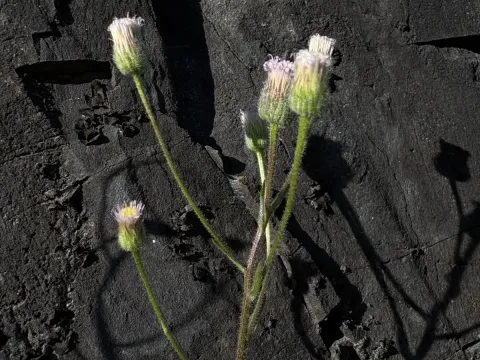
Droebach fleabane
Erigeron droebachiensis
Droebach fleabane (Erigeron droebachiensis) belongs to the Asteraceae family and is recognized as a hardy perennial herb. It originates from the northern territories, primarily in Scandinavia, where it has adapted to cold climates and diverse meadow conditions.
What the section contains
Droebach fleabane
Botanically, the plant features erect, pubescent stems that can grow up to 80 cm in height. Its lanceolate leaves are arranged along the stem, providing the plant with the structural integrity needed to withstand moderate winds and varying weather conditions typical of its native habitat.
The inflorescence consists of daisy-like flower heads with a distinct central disk and pale ray florets. This species is often noted for its subtle, aesthetically pleasing appearance during the flowering stage, which usually occurs from early to mid-summer.
To cultivate Droebach fleabane successfully, one must provide well-drained, nutrient-rich soil. The plant thrives in environments that offer moderate sunlight, though it is adaptable enough to handle partial shade in hotter regions provided that soil moisture is kept consistent.
Temperature requirements are geared towards cooler climates. It exhibits impressive frost resistance, allowing the plant to remain dormant throughout the winter and emerge vigorously in the spring without special protective measures, assuming the soil does not remain waterlogged.
Like many species in the Asteraceae family, this plant is susceptible to powdery mildew, especially in regions with high humidity. Ensuring adequate spacing between individual plants is the most effective way to prevent the spread of fungal spores in the garden or field.
Aphids represent the most significant insect threat, as they tend to congregate on the soft tissues of the buds and young leaves. Integrated pest management, including the introduction of natural predators like ladybugs, can often keep aphid populations below the threshold of economic damage.
Root rot remains a concern if the soil drainage is inadequate. Maintaining a soil structure that prevents water from sitting around the roots is crucial for the long-term health and survival of the plant, especially in heavy clay-based garden beds.
Snails and slugs may feed on the tender foliage during the spring growing season. Protective barriers or organic baiting methods are often sufficient to protect young seedlings until they grow large and tough enough to resist such herbivory.
Proper hygiene, such as clearing away debris and weeds surrounding the plants, is recommended to discourage pests and pathogens from overwintering. Regular monitoring ensures that any issues are detected early, allowing for targeted intervention.