
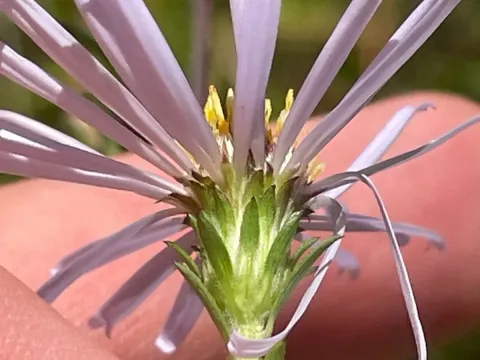
Douglas aster
Symphyotrichum subspicatum
Sowing seeds of Symphyotrichum subspicatum is best performed in the autumn to mimic natural winter stratification, which significantly improves germination rates.
What the section contains
Douglas aster
If sowing in the spring, it is essential to stratify seeds in cold conditions at temperatures between 2 and 5 degrees Celsius for about six weeks.
Seeds should be sown shallowly, as they require light to germinate effectively and should not be buried deeply beneath the soil surface.
For direct seeding in the field, maintain a spacing of at least 40 centimeters between plants to allow for optimal air circulation and growth.
Starting plants in a greenhouse or nursery provides better protection for young seedlings against early season weeds and fluctuating weather conditions.
Douglas aster, a member of the Asteraceae family, is highly valued for its ability to thrive in various soil types, particularly in moist riparian environments.
The plant requires full sun to partial shade; however, flowering is most prolific when the plant is situated in a location with abundant direct sunlight.
Soil should be rich in organic matter, well-draining, and kept consistently moist throughout the growing season to prevent drought stress.
This species is well-adapted to coastal and mountain climates, displaying excellent resilience to cold temperatures and winter dormancy cycles.
Regular maintenance, including the removal of spent flower heads, can encourage a secondary flush of blooms and improve the overall plant appearance.
Powdery mildew is the most common fungal disease, typically occurring during late summer when humidity is high and airflow is restricted around the leaves.
Aphids are frequent visitors during the early growing season, clustering on new shoots and buds, which can be managed with insecticidal soaps or natural predators.
Root rot may occur if the soil remains waterlogged for extended periods, making proper site selection and drainage critical for plant health.
Leaf miners can cause aesthetic damage to the foliage, which generally does not kill the plant but reduces its ornamental value during the season.
Implementing proper cultural practices such as mulching and avoiding overhead irrigation can significantly reduce the risk of common fungal infections.