
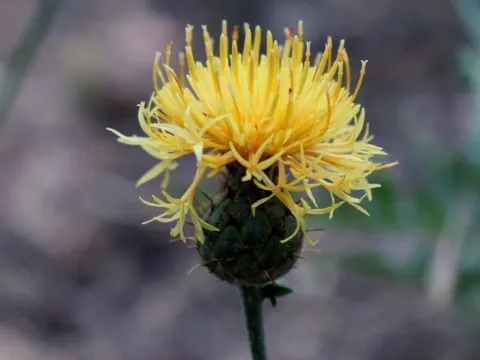
Dyer's knapweed
Centaurea glastifolia
Dyer's knapweed (Centaurea glastifolia) is a perennial herbaceous plant from the Asteraceae family. Known for its robust nature, it is well-adapted to the harsh conditions of its native Central Asian steppe habitats.
What the section contains
Dyer's knapweed
Seeds are typically sown in early spring once soil temperatures have reached at least 10 degrees Celsius. The germination process is improved by prior stratification for several weeks to mimic natural winter conditions.
The seeds should be planted at a shallow depth of 1 to 2 centimeters to ensure they receive sufficient light to trigger germination. Moist soil conditions are essential during the initial weeks of seedling establishment.
Due to the plant's taproot system, it is advisable to sow seeds directly into their permanent location. Transplanting established plants is risky and often leads to stunted growth or failure to bloom in the first season.
Optimal spacing should be maintained at roughly 45-50 centimeters between plants. This prevents overcrowding, allows for air circulation, and provides the necessary space for the basal leaf rosettes to develop fully.
This species is highly heliophilic, requiring full sun exposure to flourish. Providing adequate solar radiation is critical for both the vegetative development of the plant and the intensity of its flowering.
Dyer's knapweed thrives in well-drained, slightly alkaline soils. It is particularly intolerant of waterlogged soil conditions, which can quickly lead to root rot and other physiological disorders.
As a drought-tolerant crop, it is an excellent candidate for regions with limited rainfall. Its deep root system allows it to access moisture from lower soil horizons during prolonged dry spells.
Soil fertility requirements are generally low. Over-fertilization, especially with nitrogen, can negatively impact flowering by promoting excessive leaf growth at the expense of blossom production.
The plant demonstrates remarkable cold hardiness, surviving winter conditions in many temperate climates. In areas with extreme fluctuations and no snow cover, a thin layer of organic mulch can protect the root zone.
Aphids and spider mites are the most common pests affecting this crop, particularly during hot and dry summer months. Monitoring for these pests is essential to prevent significant damage to the floral stalks.
Powdery mildew can occur in conditions of high humidity or poor air circulation. Proper spacing of plants is the most effective cultural method to prevent the spread of this fungal disease.
Root and crown rot represent significant threats if the soil remains excessively damp. These diseases are best managed through meticulous selection of well-drained planting sites and cautious irrigation practices.
Leaf spot infections may occasionally appear, usually caused by environmental stress or fungal pathogens. Removing affected foliage helps to curb the spread of the disease to healthy parts of the plant.
Integrated pest management strategies are recommended, emphasizing cultural practices such as weeding and correct irrigation over the prophylactic use of synthetic pesticides.