
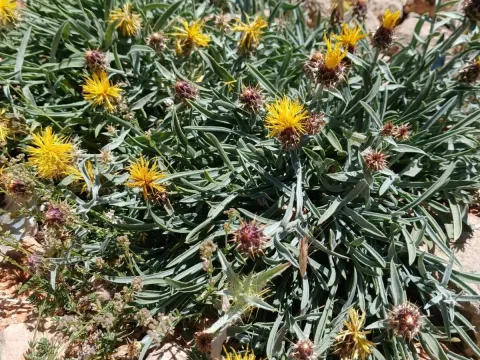
Draba-leaved knapweed
Centaurea drabifolia
Draba-leaved knapweed (Centaurea drabifolia) is a perennial herbaceous plant belonging to the Asteraceae family. Known for its resilience, this species has gained interest in specialized agricultural projects and restorative land management.
What the section contains
Draba-leaved knapweed
Originating from the rocky terrains of Asia Minor, this plant is perfectly adapted to semi-arid environments. It thrives in high-exposure areas where standard crops often struggle due to limited water availability and harsh sunlight.
The primary soil requirement for successful cultivation is excellent drainage. The plant is prone to root rot if water stagnation occurs, making sandy or rocky, alkaline soils ideal for its development. Heavy clay soils should be heavily amended with grit.
Climatological needs revolve around intense sunlight and seasonal shifts. Being a mountain-origin species, it possesses high frost tolerance, making it suitable for temperate regions provided that the dormant season is not excessively wet.
Economically, the plant serves as a valuable nectar source for bees and a stabilizer for slopes. Its low-maintenance nature makes it an excellent choice for environmental enrichment programs in non-arable lands.
The primary threats to Centaurea drabifolia are fungal infections, such as powdery mildew and root rot, which typically arise in overly humid or poorly ventilated conditions. Regular monitoring is essential to prevent rapid spread.
Insect pests, particularly aphids, can infest the inflorescences during the active growing season. While infestations are rarely lethal, they can weaken the plant and reduce its aesthetic and nectar-producing quality.
Soil-borne pests like nematodes can cause damage in poorly managed soils. Maintaining proper soil structure and preventing over-fertilization are key prophylactic measures to ensure the plant remains vigorous and resistant to attacks.
Gray mold can affect the floral parts during rainy periods, necessitating careful site selection. Ensuring proper plant spacing is a fundamental agricultural practice to allow sufficient airflow and reduce humidity levels around the foliage.
When implementing pest control, it is critical to prioritize biological solutions. Because the plant is highly attractive to pollinators, the use of broad-spectrum insecticides should be strictly avoided to protect beneficial insect populations.