
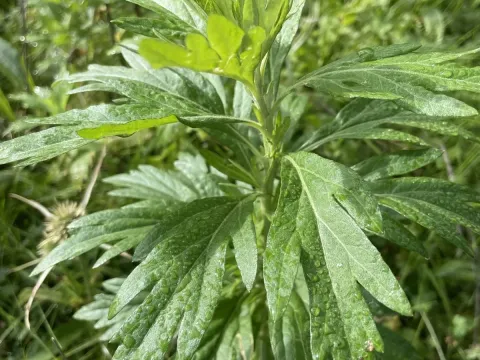
Douglas mugwort
Artemisia douglasiana
Douglas mugwort (Artemisia douglasiana) is a perennial herbaceous plant belonging to the Asteraceae family. Native to western North America, it is typically found in moist environments such as streambanks, meadows, and riparian zones.
What the section contains
Douglas mugwort
Botanically, the plant is characterized by its silvery-white foliage and its capacity for rapid vegetative propagation through an extensive rhizome system. It typically reaches heights of 1 to 2 meters, making it a robust grower in its preferred habitats.
The plant thrives in regions with temperate climates. It prefers full sun exposure to maintain its characteristic silvery color, although it can tolerate partial shade. Douglas mugwort is resilient but requires well-drained soil to prevent root rot during dormant winter months.
Agricultural requirements include providing loose, fertile soil with moderate moisture levels. Once established, the crop is highly competitive and requires minimal maintenance, though initial weed control is essential to ensure the plant gains a strong foothold in the field.
Host-plant uses are diverse, ranging from traditional herbal medicine to ecological restoration. Its deep root system makes it an excellent choice for erosion control on slopes and in areas recovering from soil disturbance.
Fungal pathogens represent the primary threat to Douglas mugwort, particularly those that flourish in poorly drained, waterlogged conditions. Root and crown rot are frequent issues if the soil moisture levels are not strictly managed.
Pests such as aphids and spider mites can infest the foliage, particularly during hot and dry summers. These infestations may reduce the overall vitality of the plants and affect the aesthetic quality of the crop if grown for ornamental purposes.
Cultural management is the most effective approach for disease control. Ensuring adequate spacing between rows promotes air circulation, which significantly lowers the risk of mildew and other common fungal diseases in dense plantings.
Integrated Pest Management (IPM) strategies are recommended for commercial growers. This involves regular monitoring, the use of beneficial insects, and biological pesticides rather than broad-spectrum synthetic chemicals.
Sanitation practices, including the removal of dead plant material at the end of the growing season, are critical to reducing the carryover of pathogens into the next year's crop cycle.