
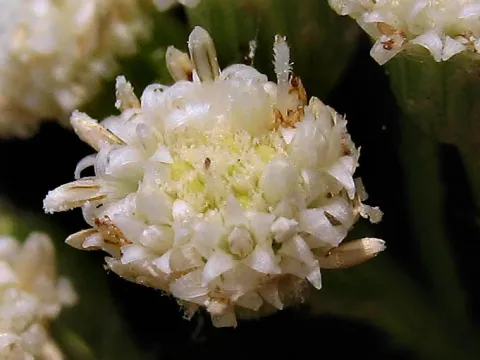
Douglas Baccharis
Baccharis douglasii
Douglas Baccharis (Baccharis douglasii) is a perennial herbaceous plant belonging to the Asteraceae family. Unlike many other members of the genus that grow as woody shrubs, this species is noted for forming dense rhizomatous clumps.
What the section contains
Douglas Baccharis
It is native to the western regions of North America, where it thrives in moist environments. Typical habitats include stream banks, coastal marshes, and low-lying areas that remain saturated for extended periods of the year.
The plant demonstrates a high tolerance for varied soil textures, including heavy clay soils that are often unsuitable for other crops. It requires full to partial sun exposure to achieve its maximum biomass and healthy development.
Agronomic management involves maintaining soil moisture levels consistent with its natural riparian habitat. While it is hardy, providing organic amendments during the early growth stages significantly improves vigor and structural integrity.
In terms of хозяйственное usage, Baccharis douglasii is primarily utilized for erosion control, bank stabilization, and ecological restoration projects where soil moisture levels are otherwise difficult to manage.
Douglas Baccharis may face challenges from powdery mildew, particularly when planted in stagnant air conditions or regions with high relative humidity and poor ventilation.
Insect pests, such as aphids and specialized leaf beetles, are common threats that target the soft tissue of the plant. Monitoring for these pests is essential, especially during the spring growth flush.
Cultural control measures, such as proper spacing and thinning, are the most effective strategies for preventing fungal outbreaks and reducing the impact of insect populations.
Integrated pest management (IPM) practices, including the use of beneficial insects and biological suppressants, are highly recommended over broad-spectrum chemical interventions.
Overall plant health is best maintained by ensuring that the soil drainage is adequate for the root system while keeping moisture levels consistent with the plant's natural requirements.