
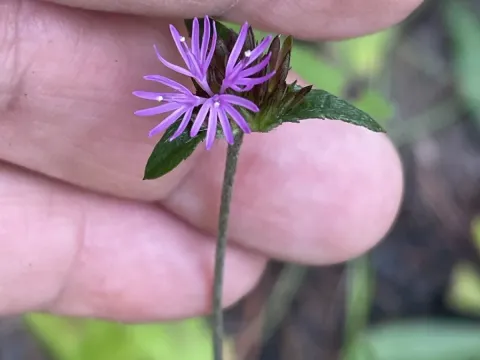
Elephantopus nudatus
Elephantopus nudatus
Elephantopus nudatus is a perennial herbaceous plant belonging to the Asteraceae family. It is recognized for its characteristic basal rosette of leaves and a slender flowering stem that produces unique cluster-like inflorescences.
What the section contains
Elephantopus nudatus
Native to specific regions in North America, this species has adapted to environments ranging from moist woodland areas to more open, well-lit habitats. It is primarily studied for its potential in specialized agricultural sectors and restoration ecology.
The plant thrives in well-drained soil types, preferring substrates that are slightly acidic to neutral in pH. Adequate aeration of the root zone is crucial for preventing physiological disorders and ensuring healthy nutrient uptake throughout the growth cycle.
Climate requirements for this culture are centered on moderate temperature ranges and consistent moisture availability. As a heat-loving plant, it performs best when protected from extreme freezing temperatures during the dormant season.
Effective agrotechnical management involves regular soil moisture monitoring and periodic cultivation to reduce competition from weeds. Providing optimal sunlight levels is also essential, as shading can significantly reduce the overall biomass production of the plant.
Agricultural threats to Elephantopus nudatus mainly involve fungal pathogens that exploit high-humidity environments, which can lead to leaf spots or root rot issues.
Pests such as aphids and leaf-chewing insects represent a common challenge, as they can cause significant damage to the foliage, thereby reducing the plant's photosynthetic capacity.
Maintaining proper spacing between individual plants is the most effective cultural practice to promote airflow and minimize the impact of moisture-related fungal diseases.
Early detection of infestations allows for targeted intervention, reducing the need for broad-spectrum chemical applications and preserving the soil microflora.
Integration of a structured weed management plan ensures that the plant does not lose vigor due to competition for water, nutrients, and sunlight in the early stages of establishment.