
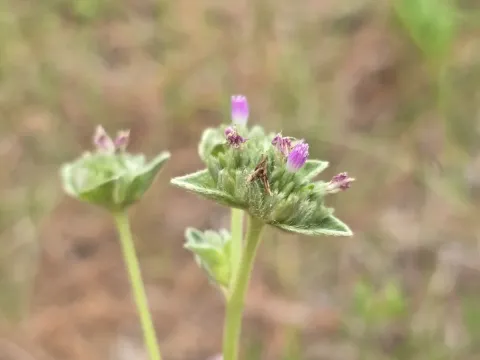
Elephantopus elatus
Elephantopus elatus
Elephantopus elatus is a perennial herbaceous plant belonging to the Asteraceae family. Known for its distinct basal rosette of leaves and upright floral stems, it represents a plant of interest for specialized agricultural systems.
What the section contains
Elephantopus elatus
The native distribution of this species spans the southeastern United States, where it thrives in coastal plains and open woodland habitats. Its natural evolutionary path has favored survival in competitive herbaceous strata.
Successful cultivation requires well-drained, sandy to loamy soils that prevent root saturation. It exhibits a preference for sunny exposures, although it demonstrates moderate tolerance to partial shade in its natural habitat.
Climatic requirements focus on warmth, as the species is sensitive to frost and extreme cold. Adequate rainfall during the growing season is essential, as persistent drought conditions can stunt development and reduce overall biomass.
Agricultural management should prioritize soil structure maintenance to allow the taproot to penetrate deeply. Regular weed control is necessary during the establishment phase, as the plant grows relatively slowly in its initial months.
The primary threats include fungal pathogens such as Pythium or Phytophthora, which proliferate in poorly drained soils. Managing drainage effectively is the most critical step in preventing root-zone degradation.
Pest issues often involve spider mites and aphids, which target the underside of the leaves. Integrated pest management strategies, focusing on biological controls, are highly recommended to maintain plant health.