
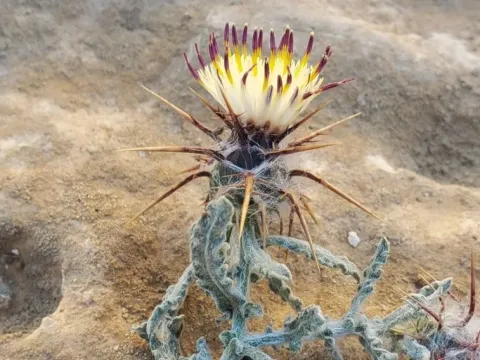
Egyptian knapweed
Centaurea aegyptiaca
Egyptian knapweed (Centaurea aegyptiaca) is a member of the Asteraceae family, well-adapted to the harsh environments of North African deserts. It is a specialized botanical species that demonstrates remarkable resilience to extreme solar radiation.
What the section contains
Egyptian knapweed
The crop thrives in sandy, well-draining soils with minimal nutrient content. Its roots are deep and capable of exploring large volumes of soil to extract scarce moisture, which is essential for survival in arid habitats.
Light intensity is the primary factor for the successful development of this species. It requires full sun exposure and is highly susceptible to etiolation if kept in shaded conditions, which severely weakens the plant's structural integrity.
Climatic requirements involve high temperatures and low atmospheric humidity. The plant enters a dormant phase or accelerates its life cycle in response to the end of the rainy season, depending on the specific environmental triggers.
Agricultural management should focus on maintaining a dry microclimate. Providing artificial irrigation is rarely necessary and can be detrimental, often leading to rapid decline of the plant population if the drainage is inadequate.
Root rot is the most significant disease affecting Centaurea aegyptiaca. It occurs predominantly when the soil moisture levels exceed the plant's physiological tolerance, causing the vascular system to collapse quickly.
Insects such as locusts and grasshoppers represent the primary biological threat, as they are capable of defoliating entire patches of this crop within a very short timeframe during their migratory phases.
Various species of aphids may infest the flowering heads, which leads to stunted growth and poor seed production. Targeted interventions are recommended only when infestations threaten the integrity of the seed stock.
Fungal leaf spot can occur during humid spring periods. Reducing the density of the canopy and ensuring proper air movement between plants can significantly reduce the risk of such outbreaks.
Vertebrate pests, specifically small desert rodents, may target the seeds of the knapweed, as they are nutrient-dense. Protective fencing or mesh covers might be required for experimental or seed production plots.