
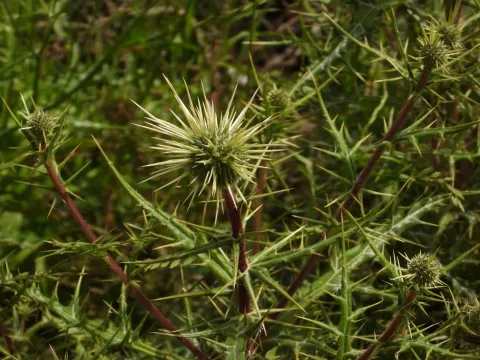
Echinops spinosissimus
Echinops spinosissimus
Echinops spinosissimus is a perennial plant, therefore sowing is typically carried out in spring once soil temperatures reach 8-10 degrees Celsius, or before winter in late October.
What the section contains
Echinops spinosissimus
To achieve uniform germination, seeds require stratification if sown in spring, which significantly enhances field emergence and initial growth vigor.
The recommended planting pattern involves 60–70 cm between rows, providing sufficient space for nutrient uptake and facilitating routine maintenance of the fields.
Seeds should be buried at a depth of 2–3 centimeters, ensuring firm contact with the moist soil layer to optimize root development and seedling establishment.
During the first year, the crop develops slowly, producing a basal rosette of leaves, making it crucial to manage weed competition throughout the early growth stage.
This species belongs to the Asteraceae family and is recognized for its exceptional drought tolerance, allowing it to thrive on poor or rocky soils.
Echinops prefers open, sunny locations, as shading causes a sharp decline in nectar production and significantly retards the plant's overall development.
The plant does not tolerate waterlogging or high water tables, which can lead to root system decay, particularly during the dormant winter months.
The ideal conditions for cultivation include light sandy loam or loamy soils with a neutral or slightly alkaline pH level.
It adapts well to the significant temperature fluctuations common in arid regions, thanks to its deep taproot that accesses moisture from deeper soil horizons.
The primary agricultural value of this crop lies in its high nectar production, which can reach 300–400 kg of honey per hectare under favorable conditions.
Seeds contain valuable fatty oils and the alkaloid echinopsine, generating significant interest from the pharmaceutical and cosmetic industries.
Seed yields in commercial cultivation typically range from 5 to 10 centners per hectare, depending on agricultural management practices and climatic factors.
Nectar secretion peaks during the second half of summer, making this plant an essential supplemental nectar source during periods of seasonal drought.
To maximize seed output, farmers should apply phosphorus-potassium fertilizers during the budding phase and the active formation of flowering heads.
Echinops spinosissimus possesses strong natural resistance to many pathogens, although poor management can lead to the development of root rots.
Under conditions of high humidity, powdery mildew may appear on the foliage, requiring the use of appropriate fungicides during early growth phases.
Primary pests include weevils and various species of aphids that damage flower buds and reduce the overall quality of the harvested seed material.
Integrated pest management, including crop rotation and timely application of insecticides, is recommended to mitigate pest impact effectively.
Consistent weed control is vital as weeds compete for scarce water and nutrients, and can also act as reservoirs for diseases affecting the crop.
Seed harvesting begins when the flower heads turn brown, become dry, and begin to shatter upon mechanical contact.
Direct combining is the preferred method, utilizing specialized headers designed for short or medium-height crops with stiff stems.
It is essential to dry the seeds immediately after harvest to a moisture level of 10–12 percent to prevent heating and loss of germination viability during storage.
Processed seeds should be stored in dry, cool, and well-ventilated facilities to maintain their biological quality and market value.
Post-harvest plant residues can be shredded and utilized as organic fertilizer or processed for biofuel production to minimize agricultural waste.