
Echinops strigosus
Echinops strigosus
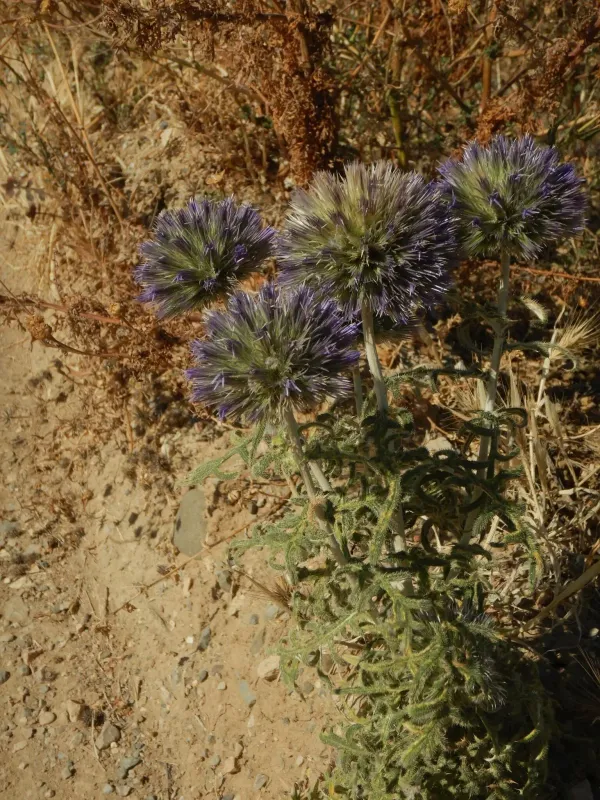
Description
Sowing dates
Echinops strigosus is a hardy plant that thrives when sown in early spring, once the soil has warmed sufficiently to ensure rapid and uniform germination.
The seeds possess a natural dormancy that can be overcome by stratification, ensuring a higher percentage of viability in field conditions.
Planting depth should be kept between 2 and 3 centimeters to provide the seeds with optimal moisture while ensuring they do not struggle to emerge through the soil surface.
The row spacing is recommended to be between 45 and 60 centimeters to accommodate the vigorous growth habit of the plant and to simplify mechanical weeding.
Early stage development is crucial, so thinning the seedlings if they emerge too densely will prevent inter-plant competition for essential nutrients and light.
Growing requirements
This species belongs to the Asteraceae family and is naturally adapted to Mediterranean climates, characterized by warm, sunny growing seasons.
It demands full sun exposure throughout the day, as reduced light levels can lead to stunted growth and poor flower head development.
The ideal soil profile is well-drained, sandy, or loamy soil, as the plant is highly sensitive to waterlogging and poor aeration in the root zone.
Echinops strigosus exhibits excellent drought tolerance, making it a suitable candidate for arid or semi-arid regions where water resources are limited.
The plant is winter-hardy, capable of surviving through colder months provided that the site is not prone to flooding or excessive standing water.
Yield
The crop is highly valued in apiculture as a potent honey plant, capable of providing nectar even during peak summer drought conditions.
Its seeds are an important source of fatty oils, which are utilized in various industrial applications, including chemistry and lubricant manufacturing.
Honey productivity is directly linked to the density of the planting and the activity of local pollinators, making site selection near healthy bee populations essential.
The yield of seeds can be quite significant under optimal conditions, provided the plants are well-spaced and free from excessive weed competition.
Harvesting strategies should be based on the phenological stages of the plant, specifically waiting for the maturation of the spherical, bristly flower heads.
Main diseases and pests
Echinops strigosus is generally robust, but excessive humidity can lead to the development of powdery mildew, which affects foliage and photosynthesis.
Some specialist insect pests may target the flowering heads, potentially causing damage that limits seed production if left unmanaged.
Root rot is a significant risk in poorly drained soils, often caused by pathogenic fungi that thrive in saturated and anaerobic substrate conditions.
Managing weeds in the first year of establishment is vital to ensure the young plants are not choked out by more aggressive, fast-growing species.
Integrated pest management, including crop rotation and the removal of infected plant material, is the best approach to maintaining a healthy crop.
Harvesting
Mechanical harvesting via combine harvesters is feasible once the flower heads have dried and turned brown, indicating seed maturity.
Post-harvest processing requires immediate cleaning to remove chaff and debris, followed by thorough drying to prevent mold growth during storage.
Storing the seeds in cool, dry conditions is imperative to preserve their germination viability for future planting seasons.
Timing the harvest is delicate, as waiting too long can result in significant seed loss due to natural dehiscence and wind dispersal of the seeds.
Quality control during drying and storage ensures the final product meets market standards, whether intended for sowing or industrial oil extraction.