
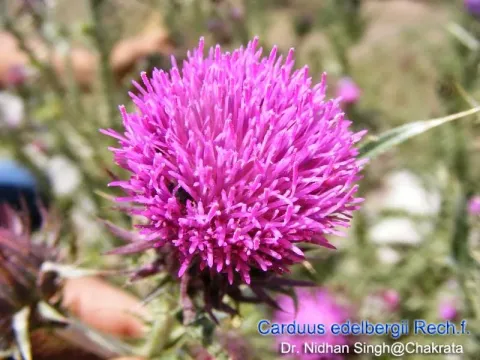
Edelberg thistle
Carduus edelbergii
The Edelberg thistle (Carduus edelbergii) is a member of the Asteraceae family. In agricultural practices, it is best sown in early spring as soon as soil temperatures reach 5–8 degrees Celsius, which is sufficient for germination.
What the section contains
Edelberg thistle
Optimal soil preparation involves deep plowing and leveling to create a uniform seedbed. The seeds should be sown at a depth of 2–3 centimeters, which ensures excellent contact with the soil and prevents desiccation.
Maintaining the correct seeding rate is essential to ensure adequate spacing between individual plants. Proper density prevents inter-plant competition for sunlight and nutrients, promoting vigorous growth.
Using high-quality, certified seed material is recommended for achieving uniform emergence. The crop is typically planted in rows, which facilitates mechanical weeding and other cultural practices throughout the growing season.
Post-sowing soil compaction (rolling) is highly recommended. This practice improves capillary moisture movement toward the seeds, ensuring successful germination even during slightly dry spring conditions.
This crop thrives in open, sunny environments. Being a light-demanding plant, any shade will significantly restrict its development and lead to poor biomass accumulation.
While the Edelberg thistle is not particularly demanding regarding soil quality, it performs best in well-drained loamy soils. It demonstrates moderate drought tolerance, though irrigation during dry spells can boost productivity.
A soil pH range from neutral to slightly alkaline is ideal for the crop. Extremely acidic soils should be amended with lime to ensure optimal nutrient uptake and root system development.
The species shows good adaptability to temperature fluctuations, making it suitable for various continental climates. However, protection from strong, cold winds during the flowering stage is beneficial.
Agrotechnical maintenance requires periodic inter-row cultivation. This practice prevents soil crusting, improves aeration of the root zone, and effectively manages competing weeds during the early stages of development.
The yield of green biomass depends heavily on soil fertility and agrotechnical input. With appropriate fertilization, especially nitrogen applied during active vegetative stages, the crop can produce high yields.
Economic use of the plant generally involves its conversion into silage or as a component in mixed forage. Due to the thistle's spiky nature, mechanical shredding is mandatory before it can be fed to livestock.
Yield metrics can fluctuate significantly based on seasonal weather patterns. Adequate moisture during the stem elongation phase is the most critical factor for maximizing biomass output per hectare.
In addition to its use as fodder, the crop serves as a significant honey source. The long flowering period attracts numerous pollinators, which can provide an additional revenue stream through honey production.
Proper management of the crop, including balanced fertilization and timely maintenance, allows producers to maximize the economic potential of this species while maintaining soil health.
The Edelberg thistle is susceptible to several pathogens common in the Asteraceae family. Powdery mildew is the most frequent issue, particularly in humid conditions with poor air circulation.
Aphids represent the primary insect pest, as they feed on succulent young leaves and shoots, leading to stunted growth. Wireworms can also impact the root system, especially when grown in recently converted grasslands.
Weed management during the initial stages is crucial. Competitive pressure from fast-growing weeds can severely stunt the young thistle plants before they establish a strong root system.
Implementing a crop rotation strategy is the most effective way to minimize pathogen buildup in the soil. A rotation interval of 3–4 years is recommended to break the life cycles of specific pests.
- Monitoring for pest outbreaks during the budding stage.
- Applying targeted fungicides if disease symptoms appear on the foliage.
- Conducting deep autumn plowing to eliminate pests overwintering in the soil.
Harvesting for green biomass is most effective at the early budding stage. At this point, the plants possess the highest nutritional value before the stems become overly fibrous and difficult for livestock to consume.
Forage harvesters equipped with integrated shredding systems are the industry standard for this task. These machines ensure efficient harvesting and immediate processing of the biomass for silage production.
If the goal is seed production, harvest should commence once the heads reach full maturity. Careful timing is required to prevent natural seed dispersal due to the opening of the flower heads.
Post-harvest seed processing includes rapid drying and cleaning to remove debris. Proper storage in dry, cool conditions is essential for maintaining high germination rates for future planting cycles.
Optimizing the harvest window is critical not only for forage quality but also for effective field management, ensuring that unwanted self-seeding is kept to a minimum after the harvest is complete.