
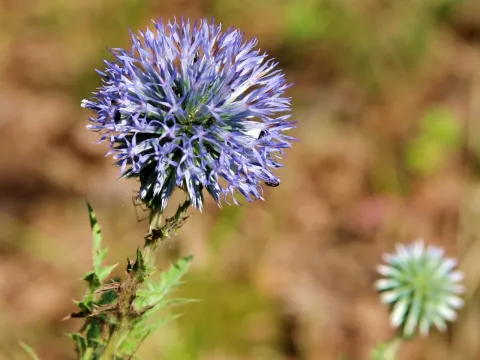
Echinops microcephalus
Echinops microcephalus
Echinops microcephalus is a perennial herbaceous plant belonging to the Asteraceae family. The optimal sowing time is late autumn for winter sowing or early spring, as soon as the soil has sufficiently thawed and is ready for cultivation.
What the section contains
Echinops microcephalus
Seeds should be sown at a depth of no more than 1–2 centimeters. Proper contact with moist soil is essential for high germination rates. In spring, it is recommended to prepare the seeds beforehand to ensure uniform emergence across the field.
A row spacing of 60–70 centimeters is recommended for industrial cultivation. This spacing allows enough room for the rosette of leaves to develop and provides access for mechanical maintenance between rows during the plant's growth cycle.
The seeding rate is approximately 6–8 kilograms per hectare, depending on seed quality. In the first year, the plant focuses on developing its deep taproot and a strong basal rosette, so keeping the area free from weeds is critical for success.
The crop is highly resilient and winter-hardy. It thrives in diverse climates and is capable of enduring harsh temperatures and challenging environmental conditions, making it suitable for marginal lands where other crops may struggle.
Echinops microcephalus thrives in sunny, open locations. It is a heliophilic plant, and shading can significantly reduce both its nectar productivity and the duration of its blooming period, which is essential for beekeeping.
While the plant is undemanding regarding soil quality, it performs best in loose, sandy loam or loamy soils with a neutral pH level. It is vital to avoid areas with high groundwater levels, as excessive moisture can be detrimental.
The species is exceptionally drought-tolerant thanks to its deep taproot, which allows it to access water from deeper soil horizons. This makes it an ideal choice for arid and semi-arid regions where irrigation is limited.
Though the plant does not require heavy fertilization, applying phosphate-potassium fertilizers during the budding phase can significantly enhance flower formation and increase the total nectar yield per hectare.
Regular cultivation of the soil between rows is necessary to prevent compaction and ensure proper aeration of the root system. Maintaining good soil structure is key to sustaining a productive plantation for several consecutive years.
The primary economic value of Echinops microcephalus lies in its status as a premium honey plant. It provides a significant amount of nectar, making it a valuable asset for commercial beekeeping operations looking to increase honey production.
Beyond its use in apiculture, the seeds are of interest to the pharmaceutical industry due to the presence of specific alkaloids. This dual-purpose utility enhances the crop's marketability and provides additional income streams for farmers.
The flowering period is extended, ensuring a stable food source for bees over several weeks. Honey produced from Echinops is known for its excellent taste, rich aroma, and slow crystallization, which is highly appreciated in the specialty honey market.
Seed yields can reach 3–5 centners per hectare under optimal conditions and good pollination. Ensuring adequate insect activity during the flowering season is crucial for achieving these yield targets for commercial seed production.
The crop is profitable due to the long lifespan of the plantation. Once established, the plants remain highly productive for 5 to 7 years, significantly reducing the costs associated with annual soil preparation and replanting.
Echinops microcephalus is generally resistant to most common agricultural diseases. However, in conditions of high air humidity, there is a risk of powdery mildew, which may require timely preventative treatment to maintain plant health.
Certain insects, particularly weevils, can pose a threat to the developing flower heads. Damage to these structures can lead to a decrease in seed quality and quantity, requiring careful monitoring during the reproductive phase.
Root rot is rarely an issue unless the plants are grown in heavy, waterlogged soils. Providing good drainage is the most effective preventative measure against soil-borne pathogens throughout the life of the crop.
Aphids may infest the flower heads during particularly dry summers, potentially stunting growth. If populations exceed damage thresholds, biological control measures should be implemented to protect the nectar source for bees.
Weed competition is the primary challenge for young plants in the establishment year. Early control measures are vital to ensure the crop establishes a strong root system, allowing it to naturally suppress weeds in subsequent years.
Harvesting the seeds of Echinops microcephalus requires caution due to the prickly, spiny nature of the flower heads. Personal protective equipment is essential for workers to prevent injury during the handling of the plant material.
Harvesting should occur only when the flower heads are fully mature and the seeds are dry. Collecting the crop in dry weather prevents mold growth and ensures the longevity of the seeds during long-term warehouse storage.
Threshing is performed using specialized equipment designed to handle prickly material. Post-harvest cleaning and calibration are necessary to remove debris and achieve the purity required for professional seed standards.
Storage should be in a dry, well-ventilated facility. Maintaining stable temperature and low humidity levels is critical to preserving seed viability, keeping germination rates above 90% for the following planting season.
When the crop is grown exclusively for honey production, harvesting is unnecessary. At the end of the season, dry plant debris can be mowed and incorporated into the soil, acting as a natural fertilizer and improving soil structure.