
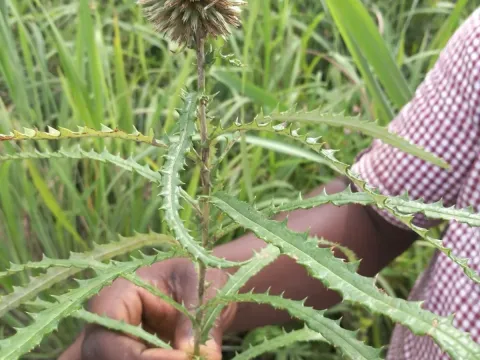
Echinops longifolius
Echinops longifolius
Echinops longifolius is a perennial herbaceous plant belonging to the Asteraceae family, valued for its hardiness and nectar production.
What the section contains
Echinops longifolius
The seeds are typically sown in late autumn to allow for natural stratification, which significantly improves germination rates in the spring.
If spring sowing is preferred, it must be completed as early as the soil conditions permit, planting seeds at a depth of 1–2 cm.
Row spacing is usually set between 45 and 60 cm, allowing enough space for the plant to develop a strong root system and rosette in its first year.
Once established, the crop provides consistent vegetative growth and reliable flowering performance for several consecutive seasons.
This species is highly drought-tolerant and capable of thriving in various environmental conditions, including poor or rocky soils.
The crop prefers sunny, open locations with well-drained soil, as it is sensitive to waterlogging and poor aeration around the root zone.
While it is not demanding in terms of nutrient intake, a well-drained loam or sandy soil provides the best conditions for maximizing nectar secretion.
Basic maintenance includes regular weeding during the early stages of growth to prevent weed competition before the plant fully establishes itself.
Fertilization is generally unnecessary but can be applied moderately in low-fertility soils to support vigorous flowering during the peak season.
The primary agricultural utility of Echinops longifolius lies in its exceptional nectar potential, making it a staple for commercial beekeepers.
It is specifically prized for its ability to continue nectar production during hot, arid summer months when many other floral sources fail.
Honey yields can reach 300 to 600 kg per hectare, depending on local climate conditions and the density of the planting area.
Beyond its melliferous value, the seeds are utilized in the pharmaceutical industry due to the presence of specific bioactive alkaloids like echinopsine.
The longevity of the crop, which can persist for up to seven years without replanting, makes it a cost-effective solution for long-term land management.
Echinops longifolius is remarkably resilient to most common agricultural diseases, often requiring no specialized chemical interventions.
Root rot is the most significant threat, which occurs almost exclusively in poorly drained or waterlogged environments where moisture accumulates.
Insect pests are generally limited to those feeding on the reproductive parts, but these rarely reach the threshold of economic injury.
Powdery mildew may appear under high-humidity conditions with insufficient airflow, suggesting that proper plant spacing is a key preventative measure.
Integrated pest management focuses on site selection and proper drainage rather than the use of fungicides or pesticides for this crop.