
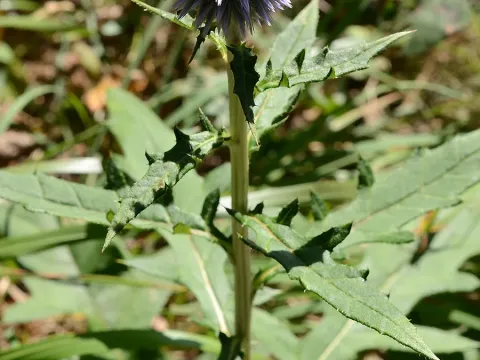
Echinops setifer
Echinops setifer
Echinops setifer, commonly known as the Daurian globe thistle, is a perennial herbaceous plant in the Asteraceae family. In agricultural settings, it is typically sown in early spring or late autumn.
What the section contains
Echinops setifer
The optimal time for planting occurs when soil temperatures reach 6–8 degrees Celsius. Autumn sowing is often preferred in colder regions, as it allows for natural stratification of the seeds, resulting in more uniform germination.
Seeds should be placed at a depth of 2–3 centimeters. When planting in rows, maintaining a spacing of 45–60 centimeters is essential for proper root system development and plant maturation.
Standard seeding equipment can be adjusted for small-seeded crops to achieve consistent density. Light rolling of the soil post-planting helps ensure adequate seed-to-soil contact for improved water absorption.
In the first year, the plant focuses on developing a basal rosette of leaves. Robust stalk growth and abundant flowering typically commence during the second growing season.
This species is highly resilient and thrives in various soil types, including stony, sandy, and nutrient-poor soils. It prefers well-drained locations and does not tolerate waterlogged areas.
As a sun-loving plant, Echinops setifer requires full exposure to sunlight for optimal nectar production. Shading significantly decreases its value as a honey plant, so field selection is critical.
Although the plant is drought-tolerant, supplemental phosphorus and potassium fertilization during the budding stage can enhance flower density and nectar yield. Excessive nitrogen should be avoided to prevent overgrowth.
Initial weed control is necessary during the first year of growth. Once established, the dense root system and sturdy foliage allow the plant to outcompete most common weeds effectively.
The native range of the species covers parts of Mongolia, China, and the Russian Far East. This background ensures high adaptation to extreme temperature fluctuations and continental climate conditions.
The primary economic value of this crop lies in its exceptional nectar productivity. A single hectare can yield up to 800 kilograms of high-quality honey, making it a favorite among commercial beekeepers.
Honey derived from Echinops setifer is noted for its therapeutic properties and unique sensory profile. The extended flowering period provides a reliable food source for bee colonies during mid-summer.
Besides nectar, the plant produces significant quantities of pollen, which is essential for the development of healthy bee broods and colony strength before the winter season.
In the pharmaceutical industry, the roots and seeds are harvested for the extraction of echinopsine. This compound is used in medical treatments aimed at neuromuscular recovery and muscle weakness.
While experimental use of the biomass as animal feed has been studied, apiculture and medicinal raw material production remain the most profitable ways to utilize this crop.
Echinops setifer is generally resistant to most pests and diseases. However, in overly dense plantations or high-humidity environments, powdery mildew may occur on the leaves.
Specific pests such as aphids or certain weevil species may occasionally infest flower heads. Monitoring should be focused on the budding and flowering stages to prevent damage.
Chemical control is rarely recommended due to the plant's attraction to pollinators. Integrated pest management, focusing on clean cultivation and crop rotation, is the preferred approach.
Regular field inspections are advised to catch early signs of infection. Removing damaged plants can help prevent the spread of fungal spores across the field.
Maintaining a balanced crop rotation schedule prevents soil fatigue and reduces the risk of pest accumulation, ensuring long-term yield stability for the grower.
Medicinal raw material is typically harvested during the peak flowering stage. Roots are extracted in late autumn or early spring when the plant is dormant and nutrients are concentrated in the root system.
Seed harvesting should occur once the flower heads become dry and brownish. Precision is key, as the seeds shed easily if the plant is disturbed by wind or mechanical stress during late ripening.
Mechanical harvesting is common, using adjusted combines to minimize losses. The material must be dried in well-ventilated areas to reach a moisture content of 12–14% to ensure safe storage.
Roots require thorough cleaning and subsequent drying in specialized ovens at 40–50 degrees Celsius. This temperature range preserves the efficacy of bioactive compounds for pharmaceutical use.
Dried raw material should be stored in dark, dry, and well-ventilated warehouses. Proper storage ensures that the quality and potency of the plant components are maintained for several years.