
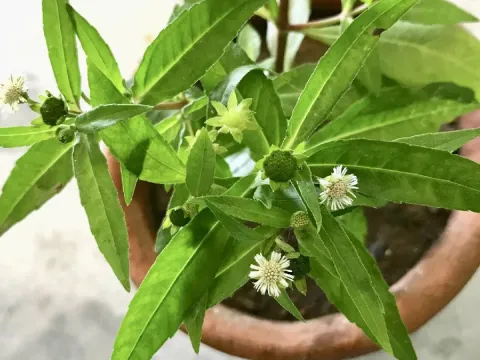
Eclipta
Eclipta
Eclipta is a tropical plant that requires warm conditions for successful germination and early growth, ideally at temperatures above 20°C.
What the section contains


Eclipta
Direct seeding is only recommended in regions with a long frost-free period, while transplanting is preferred in temperate zones to ensure a head start.
Seeds should be sown shallowly, as they require light to break dormancy and initiate the germination process properly.
Maintain high soil moisture levels consistently during the initial two weeks after sowing to ensure high germination rates.
Optimal planting density is crucial to ensure that plants have enough space to develop fully without excessive competition for light and water.
Belonging to the Asteraceae family, Eclipta thrives in wet environments and is often found growing naturally near water bodies.
The crop requires nutrient-rich, moisture-retentive soils with a pH ranging from neutral to slightly acidic for optimal nutrient uptake.
Full sun exposure is vital for the plant; shading can significantly reduce the concentration of active medicinal compounds in the leaves.
Regular irrigation is essential, as the plant does not possess mechanisms to withstand prolonged dry periods effectively.
Incorporating organic matter or compost into the soil before planting provides the necessary fertility boost for rapid biomass accumulation.
With proper management, Eclipta can produce multiple harvests throughout the growing season, significantly increasing the total yield per hectare.
The yield of dried biomass depends heavily on the frequency of harvesting and the nitrogen availability in the soil during vegetative stages.
High-intensity management can result in a substantial production volume, making it a viable crop for specialized herbal markets.
Harvesting for seed production requires postponing the final cut to allow for proper maturity of the flower heads and seed development.
Record keeping during the harvest cycle helps in optimizing future production schedules and identifying the best-performing plant varieties.
Fungal diseases are the primary threat to Eclipta, especially in humid environments where stagnant air promotes pathogen growth.
Root rot and leaf spot diseases can severely impact productivity if the field is poorly drained or if irrigation is excessive.
Insect pests, including aphids and spider mites, can damage the foliage and stunt plant growth during the early stages.
Integrated pest management strategies, such as field sanitation and balanced fertilization, are key to preventing large-scale outbreaks.
Monitoring the crop for signs of stress or pest pressure allows for timely intervention using biological or organic-approved treatments.
Harvesting is typically performed by cutting the stems just above the ground level, which encourages secondary regrowth from the base.
Timing the harvest to coincide with the onset of flowering ensures the highest concentration of phytochemicals in the harvested material.
Post-harvest handling requires quick processing to ensure the biomass remains clean and free from contamination during the drying phase.
Drying the material in controlled conditions, away from direct sunlight, preserves the quality and chemical profile of the plant parts.
Stored material should be placed in moisture-proof containers in a cool environment to maintain quality until it is ready for processing.