
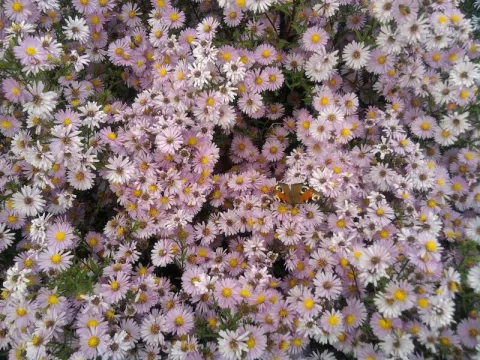
New York aster
Aster novi-belgii
The New York aster (Symphyotrichum novi-belgii), a member of the Asteraceae family, is commonly propagated vegetatively, as seed-grown plants often fail to retain specific cultivar traits. The best time to divide and replant is early spring, right as the plant begins its vegetative cycle.
What the section contains
New York aster
Division can also be performed in autumn, immediately after the mass flowering phase concludes. It is recommended to divide the root clumps every 3 to 4 years to prevent the center of the plant from dying out and to maintain optimal bloom quality for the next season.
For seed propagation, sowing is done either outdoors in late autumn or in containers indoors during March. The seeds require a period of stratification to germinate successfully, so winter sowing in an unheated greenhouse or directly in the garden is highly effective.
When planting, provide spacing between 40 and 60 centimeters depending on the variety's mature height. Denser planting helps achieve a solid floral display, but it may also restrict airflow, increasing susceptibility to fungal pathogens if the environment is humid.
Consider the aggressive nature of the rhizomes when selecting a planting site. This plant spreads rapidly through its root system, so it is often necessary to use physical garden edging or landscape borders to keep the plants within a designated bed.
This crop is a sun-loving species that requires open, well-lit locations to produce strong, sturdy stems. In shaded areas, the plants tend to become leggy and weak, often resulting in poor or non-existent flowering, which reduces their overall ornamental value.
New York asters prefer moderately fertile, loamy, or sandy soils with a neutral to slightly alkaline pH. Heavy clay soils must be amended with compost or sand to ensure proper drainage and prevent the roots from becoming waterlogged during rainy periods.
Sufficient soil moisture is critical, particularly during the bud formation phase in late summer. While the plants require steady water, they are sensitive to water stagnation, which can quickly lead to root rot and significant plant decline.
To support vigorous growth, apply balanced mineral fertilizers in early spring and again when flower buds begin to set. Incorporating organic matter, such as aged manure or compost, once every two years helps maintain long-term soil fertility.
The plant is exceptionally winter-hardy and requires no special protection in cold climates. After the first hard frost kills the top growth, stems should be cut back to the ground to prepare the root system for a healthy dormant period.
Powdery mildew is the most significant disease affecting New York asters, appearing as a white dusty film on the leaves during periods of high humidity. To control this, ensure proper spacing and apply sulfur-based fungicides if an infection is detected.
Root rot often occurs if the plants are situated in poorly drained soil or overwatered. Prevention involves monitoring irrigation schedules and ensuring the soil surface is aerated to promote faster evaporation and healthier root respiration.
Pests like aphids and spider mites frequently target the succulent growth of the stems and the undersides of leaves. Regular inspections and the application of insecticidal soaps or systemic pesticides are essential to preserve the plant's health.
Slugs and snails can cause considerable damage to young shoots in early spring, leaving jagged holes in the foliage. Implementing physical barriers or organic molluscicides around the base of the plants can help protect young growth from these pests.
Verticillium wilt is a serious vascular disease that can cause sudden yellowing and drying of the foliage. Once a plant shows signs of systemic wilt, it should be immediately removed and destroyed to prevent the fungus from spreading through the soil to neighboring plants.
The New York aster is widely cultivated as a cut flower due to its long-lasting blossoms and vibrant autumn colors. Harvest should occur when the buds are just beginning to show color and open, ensuring the longest vase life for floral arrangements.
The blooming season stretches from late summer through the first frosts, providing a reliable source of late-season cut flowers for the market. Always use clean, sharp shears to harvest the stems, leaving enough foliage on the plant to support energy storage for winter.
In a vase, the flowers remain fresh for 10 to 14 days provided that the water is changed every few days and the stems are re-cut. This makes the species a profitable choice for commercial floristry during the late autumn months.
Landscape applications include border displays, mass plantings, and pollinator-friendly gardens. The species is highly valued for its reliability, low maintenance, and ability to keep a neat structure until the onset of winter weather.
For seed production, collect the flower heads after they have begun to shed seeds and dry them thoroughly in a well-ventilated, dark area. Store seeds in paper envelopes in a cool, dry environment to maintain maximum viability for the following planting season.