
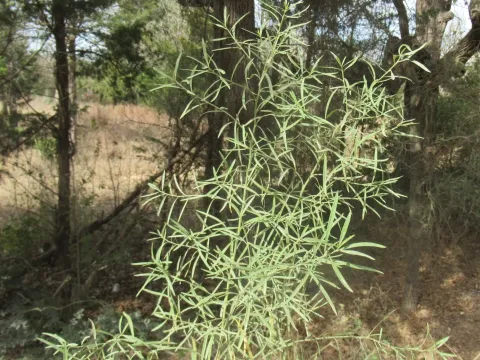
Baccharis neglecta
Baccharis neglecta
Baccharis neglecta, commonly known as New Deal weed or Roosevelt weed, is a perennial evergreen shrub belonging to the Asteraceae family. It is native to the southwestern United States and Mexico, thriving in diverse arid landscapes.
What the section contains
Baccharis neglecta
The plant is highly regarded for its ability to adapt to harsh environments, including gravelly and sandy soils that are nutrient-deficient. Its natural resilience makes it an ideal candidate for soil stabilization projects in semi-arid regions.
Optimal growth is achieved in full sunlight. Baccharis neglecta requires excellent drainage; it is highly susceptible to root rot if the soil remains waterlogged for extended periods, making sandy or rocky substrates the preferred choice.
Climatically, the species is suited for warmer regions. While it exhibits some tolerance to cold, prolonged exposure to freezing temperatures can cause significant die-back, requiring careful siting in areas prone to hard frosts.
Economically, this shrub is utilized in landscape architecture, roadside plantings, and environmental restoration. It serves as an important late-season nectar source for pollinators, supporting biodiversity in otherwise barren areas.
Diseases in Baccharis neglecta are primarily related to environmental stress, particularly excessive humidity or poor soil aeration. Fungal pathogens may attack the foliage, leading to spots or powdery mildew if air circulation is insufficient.
Pest issues often involve sucking insects like aphids, which tend to congregate on the soft, developing tissue of new shoots. While the plant is generally hardy, heavy infestations can cause stress and diminish the plant's aesthetic value.
Root zone pathogens are a significant concern when irrigation is managed improperly. Ensuring that the soil dries out between watering cycles is a crucial management practice to prevent the colonization of detrimental root fungi.
Effective management requires proactive monitoring of the shrub's canopy. Pruning away damaged or diseased branches not only improves the overall shape of the plant but also removes potential breeding grounds for various pests.
Gardeners and land managers should focus on preventative maintenance. By providing adequate space between plantings and ensuring a well-drained site, the risk of common diseases is minimized, allowing the shrub to maintain its natural vigor.