
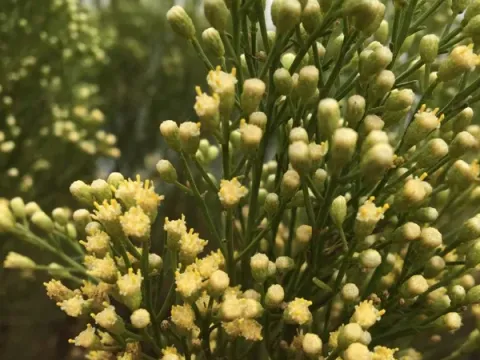
Baccharis
Baccharis hybrids
Baccharis is typically propagated through seeds or stem cuttings, with spring being the ideal time to initiate growth when temperatures are consistently warm.
What the section contains
Baccharis
Seeds should be sown in a well-draining potting mix, barely covering them, as light is often a trigger for successful germination in many Baccharis species.
When using cuttings, select healthy semi-hardwood shoots during late summer, treat them with rooting hormone, and place them in a humid, shaded environment.
Seedlings or rooted cuttings require regular monitoring for moisture levels until they have established a robust root system in their permanent location.
Proper spacing is crucial to prevent competition for resources and to ensure that air circulation remains optimal as the plants reach maturity.
As a member of the Asteraceae family, Baccharis is highly valued for its exceptional adaptability to challenging environmental conditions, including poor soils.
This plant thrives in full sun exposure, which is necessary to maintain its structural integrity and encourage the development of numerous flowers.
It demonstrates remarkable drought tolerance, making it an excellent candidate for xeriscaping or areas where supplemental irrigation is not feasible.
Soil drainage is the most critical requirement, as these shrubs are highly susceptible to root rot if subjected to waterlogged conditions for extended periods.
While Baccharis can tolerate a range of pH levels, it performs best in neutral to slightly acidic soils that are light and aerated.
Baccharis serves primarily as a decorative and functional plant, widely used in landscaping for erosion control on slopes and as durable windbreaks.
Its late-season flowering cycle provides a vital source of nectar and pollen for pollinators, significantly boosting its utility in apiary management.
The plant's dense growth habit makes it an effective biological barrier against dust and noise pollution in suburban and rural infrastructure projects.
Biomass production is consistent under proper maintenance, allowing for its use in creating stable, low-maintenance green spaces in arid regions.
Strategic pruning can enhance the plant's natural form and increase the overall output of floral resources, benefiting both the landscape and the local ecosystem.
Fungal infections are the most common issue for Baccharis, particularly when plants are grown in humid climates with poor air circulation.
Pests like aphids and spider mites can occasionally affect the foliage, especially during periods of extreme heat or drought when the plants are stressed.
Preventive maintenance, including the removal of dead or crossing branches, is essential to keep the shrub healthy and resistant to opportunistic pathogens.
Powdery mildew may appear on leaves in damp conditions, necessitating the use of targeted fungicides if the infestation compromises the plant's health.
Root system health should be protected by ensuring that soil remains well-drained, preventing the onset of wilting diseases caused by soil-borne fungi.
Seed harvesting should occur after the seed heads have fully matured and begun to dry, typically signaled by a shift in color to a silver or grey hue.
Maintenance pruning is best performed immediately after the flowering season concludes to stimulate healthy new growth for the following year.
Tools used for harvesting or pruning should be sanitized to prevent the transmission of diseases between plants, especially in larger stands of Baccharis.
When collecting cuttings, always choose healthy, pest-free stems to ensure the highest success rate in nursery propagation efforts.
If harvesting for ornamental purposes, such as dried flower arrangements, gather stems just as the flowers reach their peak aesthetic state.