
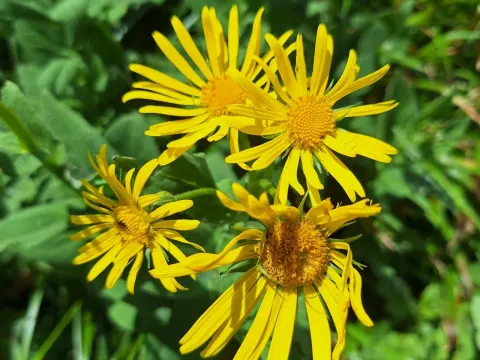
Austrian leopard's bane
Doronicum austriacum
Austrian leopard's bane (Doronicum austriacum) is a herbaceous perennial member of the Asteraceae family. It is widely recognized for its vibrant yellow flowers and ability to thrive in cool, shaded environments.
What the section contains
Austrian leopard's bane
The species originates from the mountain regions of Central and Southern Europe. It prefers moist, humus-rich soils and is typically found in alpine meadows, clearings, and forest edges where moisture is consistent.
The plant features a basal rosette of heart-shaped leaves and tall, leafy stems. It adapts well to temperate climates and is hardy, capable of surviving harsh winters without specific soil protection.
Regarding soil requirements, the culture favors slightly acidic to neutral soil that remains cool. Incorporating organic matter such as compost or leaf mold at the planting stage ensures optimal root development.
Maintenance involves routine watering during dry spells and ensuring the area is well-mulched. Consistent moisture is essential to prevent wilting and promote continuous flowering throughout the growing season.
Slugs and snails are the primary pests that damage the succulent foliage of the plant, especially during humid spring weather. Physical barriers or organic molluscicides are recommended for effective control.
Powdery mildew represents a significant fungal threat, usually triggered by poor air circulation or overcrowding. Proper spacing between plants is critical to mitigate the risk of pathogen spread.
Root rot is a common issue when the plant is grown in compacted, heavy clay soils that retain excess water. Improving soil structure through drainage is a vital preventative measure.
Aphids can occasionally cluster on the flower stalks, causing stunted growth. Early detection and spraying with insecticidal soap are often sufficient to manage these infestations.
Practicing good sanitation, including the removal of dead leaf debris in late autumn, helps reduce the overwintering sites for fungal spores and common garden pests.