
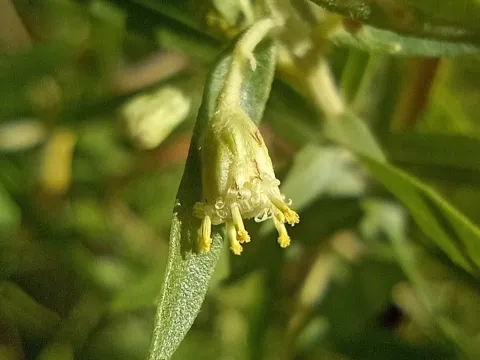
Baccharis dracunculifolia
Baccharis dracunculifolia
Baccharis dracunculifolia is a perennial evergreen shrub belonging to the Asteraceae family. It is a robust plant, reaching heights of 1 to 3 meters, characterized by its narrow, lanceolate leaves and a dense, woody branching structure that is highly resilient to adverse environmental conditions.
What the section contains
Baccharis dracunculifolia
Native to South America, particularly Brazil, this species is well-adapted to tropical and subtropical climates. It thrives in sunny locations with well-drained soil, showing impressive adaptability to various soil compositions, including sandy and rocky terrains that are often unsuitable for other crops.
In terms of cultivation, Baccharis requires ample sunlight for the optimal production of resinous compounds. These resins are the primary source for bees to produce the world-famous "green propolis," which has significant economic and medicinal value, especially in the global export market.
The plant is highly valued for its ecological contribution, as it assists in restoring soil health and preventing erosion in degraded landscapes. Its agricultural management is relatively simple due to the plant's natural hardiness, requiring minimal fertilization and irrigation once it is established.
Industrial applications of Baccharis dracunculifolia focus on harvesting leaf material for pharmacological extraction and facilitating apiculture. It serves as a keystone species in agroforestry systems, providing both stability to the land and a continuous supply of essential biochemical precursors.
The most common threat to Baccharis plantations is waterlogging, which can cause root system collapse and susceptibility to pathogens. Careful field selection and the establishment of adequate drainage are fundamental to preventing these issues in a commercial production setting.
Pests such as leaf-eating caterpillars and aphids can affect the growth of young shrubs. Integrated pest management strategies, focusing on biological controls rather than synthetic pesticides, are highly recommended to preserve the quality of the resin collected by honeybees.
Fungal leaf spot diseases may appear in environments with high humidity and poor ventilation. Keeping plant rows well-spaced and performing regular pruning ensures that light reaches the inner foliage, which significantly reduces the probability of infection and improves overall yield.
Invasive weeds are the primary concern during the establishment phase. Effective control methods include mulching or mechanical inter-row cultivation during the first two years of the plant's life until the canopy is sufficiently developed to suppress competitive growth.
Maintaining a balanced ecosystem is essential for long-term plantation health. By encouraging native predators and biodiversity, farmers can minimize the need for external inputs and maintain the organic standards often required for medicinal-grade botanical products.