
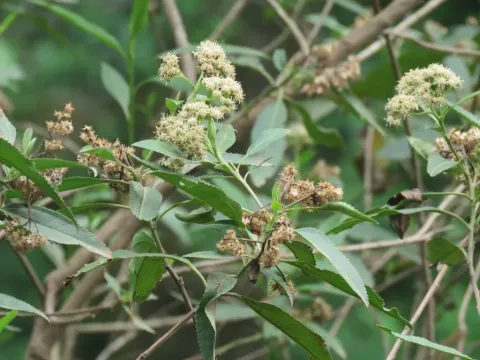
Baccharis floribunda
Baccharis floribunda
Baccharis floribunda is a perennial evergreen shrub belonging to the Asteraceae family. Native to the mountainous regions of South America, this plant is well-adapted to specific high-altitude conditions and displays unique biological features common to the genus.
What the section contains
Baccharis floribunda
The crop thrives in well-drained soil types, preferring substrates that are slightly acidic to neutral. Providing ample sunlight is critical, as the species requires high light intensity to maintain its characteristic foliage density and promote successful flowering cycles.
Regarding moisture, Baccharis floribunda exhibits moderate drought tolerance once established. However, during the early stages of growth, consistent watering is necessary to develop a strong root system, while ensuring that the soil does not become waterlogged.
Agronomic practices for this plant involve structural pruning to maintain its form and improve air circulation within the canopy. Applying balanced fertilizers during the peak growing season supports vigorous shoot development and overall plant health.
Climate requirements include a stable, temperate environment. While it is hardy in its native range, protecting the shrub from severe, prolonged frosts is essential for maintaining its evergreen character and preventing winter injury in colder climates.
The primary threats to Baccharis floribunda involve fungal pathogens triggered by poor drainage or excessive humidity. Root rot is the most common concern, often manifesting as yellowing leaves and a decline in overall plant vigor.
Insect pests, specifically aphids and spider mites, pose significant challenges to the plant's health. These pests colonize the leaves and stems, extracting vital sap and leading to reduced photosynthetic efficiency and potential plant deformation.
Preventive strategies include maintaining good sanitation practices, such as removing fallen debris from around the base of the plant. This reduces the habitat available for pests and helps minimize the spread of fungal spores in the area.
Integrated pest management is highly recommended, utilizing biological controls or targeted insecticides when populations exceed economic thresholds. Early detection through regular monitoring is the most effective way to prevent widespread infestation.
Adequate ventilation and spacing between plants are crucial for disease prevention. By ensuring that the canopy receives enough airflow, growers can significantly reduce the risk of mold and other moisture-related pathologies that impact the plant's development.