
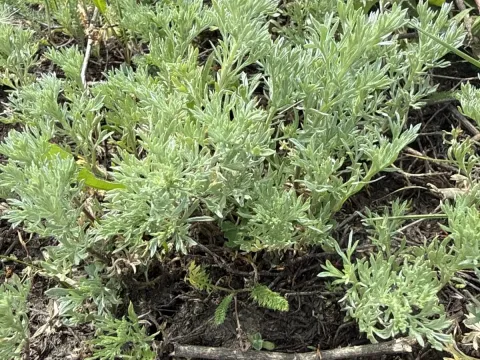
Austrian wormwood
Artemisia austriaca
Austrian wormwood (Artemisia austriaca) is a perennial herbaceous plant belonging to the Asteraceae family. It is a subshrub characterized by dense, grayish-white tomentose pubescence, which is an adaptation to arid and semi-arid environments.
What the section contains
Austrian wormwood
The native distribution of this species spans across the Eurasian steppes. It is highly adapted to open, sun-exposed habitats where competition from taller vegetation is limited by extreme environmental stressors.
The plant demonstrates remarkable soil versatility, growing effectively in dry, sandy, rocky, or even slightly saline soils. Its deep taproot system allows it to survive prolonged droughts by reaching deep groundwater reservoirs.
In agronomy, it is often viewed as a rangeland weed. Its rapid colonization of degraded pastures can lead to a reduction in high-quality forage crops, as its bitter-tasting alkaloids make it unpalatable for livestock.
From a functional perspective, it has been studied for its secondary metabolites. These compounds exhibit strong antimicrobial and insect-repelling properties, making it an object of interest for alternative plant protection strategies.
Pathogenic threats to Austrian wormwood include various fungal infections, such as powdery mildew, which can significantly damage the foliage during periods of increased humidity or poor air circulation.
Insect pests that target this plant include specialized beetles and aphids. These insects feed on the vegetative parts and flower heads, serving as a natural mechanism of control in dense populations of the plant.