
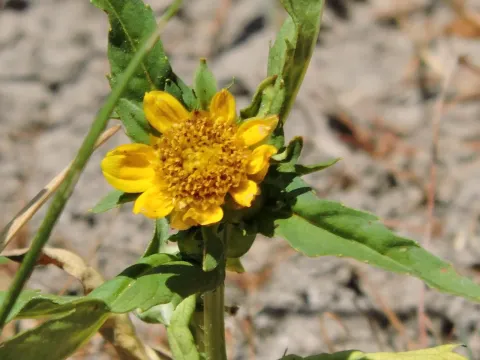
Nodding bur-marigold
Bidens cernua
Nodding bur-marigold (Bidens cernua) is an annual herbaceous plant species belonging to the Asteraceae family. It is widely distributed across the Northern Hemisphere, typically found in wet, riparian environments.
What the section contains
Nodding bur-marigold
The plant thrives in saturated soils and is classified as a hydrophytic species. Successful cultivation requires a consistent water supply, making it an ideal candidate for riparian zone restoration or wetland cultivation.
Regarding soil preferences, it favors nutrient-rich, silty or clay-heavy substrates. It shows high resilience to areas that experience periodic flooding, which is a key adaptation for its natural survival in riverine habitats.
Climatic requirements focus on a temperate environment with sufficient sunlight throughout the growing season. While the plant can tolerate shade, full sun promotes better development and higher seed production rates.
Botanically, the species is recognized by its nodding, yellow flower heads and oppositely arranged leaves. It acts as a vital component of the local ecosystem, supporting various pollinators that frequent its distinctive blossoms.
The primary threats to the health of Bidens cernua are fungal pathogens such as powdery mildew, which thrive in high-humidity conditions common to the plant's natural habitat.
Pests that frequently infest the crop include aphids and various leaf-feeding larvae. These insects can cause significant damage to the foliage, especially when the plants are grown in dense clusters.
Root rot represents another significant danger, particularly in areas where water circulation is poor or the soil becomes anaerobic due to extreme waterlogging.
Effective management includes regular monitoring and maintaining optimal plant spacing to ensure adequate airflow, which prevents the build-up of excess moisture around the stalks.
Agricultural intervention should focus on natural pest control methods, as chemical pesticides can compromise the purity of the plant when harvested for pharmaceutical or herbal use.