
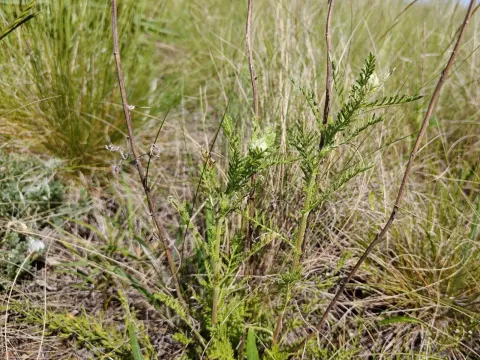
Noble yarrow
Achillea nobilis
Sowing of Achillea nobilis is best performed in early spring or late autumn. The seeds require stable temperatures of at least 10 degrees Celsius to initiate successful germination.
What the section contains
Noble yarrow
The seeds are very small and should not be buried deep. Surface sowing combined with light soil compaction ensures optimal seed-to-soil contact for moisture absorption.
Row spacing is typically set between 45 and 60 centimeters, providing enough room for mechanical weeding and promoting healthy airflow between mature plants.
In the first year, the plant focuses on developing a basal rosette of leaves and a robust root system, which is crucial for survival in subsequent seasons.
Using high-quality, clean seeds is essential, as the seedlings are slow-growing and can be easily outcompeted by weeds in the early stages of development.
Noble yarrow belongs to the Asteraceae family. It is a light-demanding plant that thrives in sunny, open locations with minimal shade from surrounding vegetation.
The plant is highly drought-tolerant and prefers light, sandy, or loamy soils with excellent drainage. It does not tolerate waterlogged conditions, which can cause root rot.
It exhibits remarkable frost resistance, surviving harsh winter conditions without additional protection, making it suitable for varied continental climate zones.
The ideal soil pH is near neutral. While the plant can grow in poor soils, moderate applications of phosphorus and potassium fertilizers enhance biomass production and essential oil content.
It is important to avoid nitrogen-heavy fertilizers, as excess nitrogen promotes vegetative growth at the expense of floral development and active compound concentration.
The yield of Noble yarrow is generally measured by the weight of dried floral heads. Productivity peaks during the second and third years of cultivation.
Under favorable conditions, an average yield of 1.5 to 2.5 tonnes of dried raw material per hectare can be achieved annually when harvested at the peak of flowering.
The plant demonstrates a strong ability to regrow, often allowing for a secondary harvest if the first cutting is performed early enough in the season and soil moisture is sufficient.
A well-managed stand remains productive for 5 to 7 years, after which the quality of the raw material declines due to the natural aging of the root crowns.
Post-harvest processing, including careful drying and removal of excess stems, is vital to maintaining the market value of the crop and its medicinal efficacy.
Noble yarrow is naturally resilient to many pests and diseases. However, high humidity can occasionally lead to powdery mildew outbreaks in poorly ventilated stands.
Aphids and certain leaf-eating beetles are the most frequent pests, particularly during hot and dry spells when they attack young buds and tender foliage.
Preventative measures include maintaining adequate spacing to encourage air circulation and strict adherence to crop rotation cycles to prevent the buildup of soil-borne pathogens.
Integrated pest management, including the use of beneficial insects and biological agents, is preferred over chemical interventions to maintain the organic quality of the product.
Regular field scouting is recommended to identify early signs of infestation, allowing for targeted and efficient control before widespread damage occurs.
Harvesting should occur when the flower heads are fully open but before the petals start to wither, as this is when the essential oil content is highest.
Mechanical harvesting equipment should be calibrated to collect only the flowering tops with minimal stem content, ensuring a higher grade of dried product.
Harvested material must be transported quickly to the drying facility. Freshly cut yarrow is prone to rapid fermentation if left in piles for even a few hours.
Drying is conducted in controlled environments at temperatures below 45 degrees Celsius to preserve the delicate aromatic compounds and the natural color of the flowers.
After reaching a moisture content of 12-14%, the material is cleaned and packed in moisture-resistant, light-proof containers for storage and shipment.