
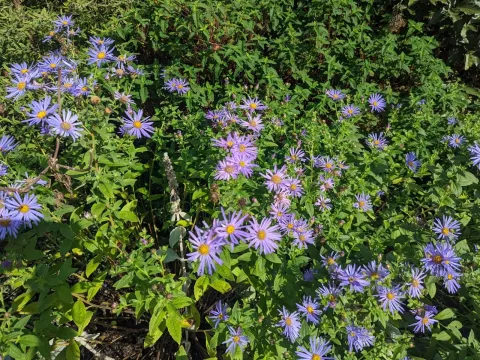
Frikart's aster
Aster frikartii
Aster frikartii, commonly known as Frikart's aster, is a popular hybrid perennial belonging to the Asteraceae family. It is a cross between Aster amellus and Aster thomsonii, highly valued for its long-lasting violet-blue blooms and garden performance.
What the section contains
Frikart's aster
The plant thrives in full sun and requires well-draining soil to prevent root rot. It is not tolerant of waterlogged conditions, making proper site selection and soil preparation essential for the longevity of the plant.
For optimal growth, provide fertile, loamy, or sandy soil with a neutral to slightly alkaline pH. Enriching the planting area with organic matter such as compost helps maintain soil structure and provides necessary nutrients.
Botanically, it forms dense, bushy clumps reaching heights of up to 90 cm. The lanceolate leaves provide a lush backdrop for the daisy-like flowers that bloom continuously from mid-summer until the first frosts of autumn.
Maintenance includes regular weeding and watering during dry spells to ensure consistent blooming. Every 3 to 4 years, the clumps should be lifted and divided to rejuvenate the plants and maintain their vigor.
Powdery mildew is the most common fungal disease affecting Aster frikartii, particularly in humid and crowded conditions. Ensuring proper spacing between plants helps increase airflow and reduces the risk of infection.
Leaf spot diseases can also occur, leading to unsightly foliage. Removing and destroying infected plant debris is a crucial hygiene practice to prevent the spread of fungal spores in the garden.
Aphids often target new succulent growth, potentially stunting the plant's development. If infestation levels are significant, insecticidal soaps or neem oil can be used for effective management.
Spider mites are another potential threat, especially in hot and dry climates. Periodic inspection of the undersides of the leaves and occasional overhead misting can help deter these pests.
Maintaining a healthy, well-nourished plant is the best natural defense against pests and diseases. Avoid over-fertilizing with nitrogen, as this encourages soft growth that is more susceptible to environmental stress.