
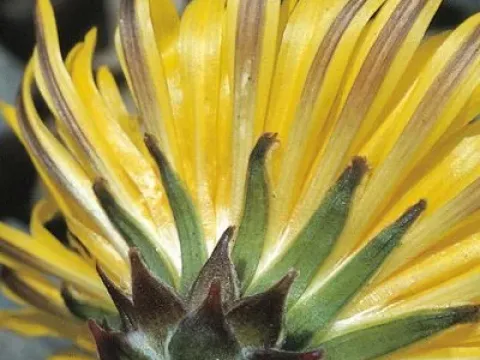
Fountain dandelion
Taraxacum fontanum
Fountain dandelion (Taraxacum fontanum) is a specialized perennial herb belonging to the Asteraceae family. This species is naturally adapted to specific ecological niches, primarily moist areas near springs or water sources, which defines its distinct growth requirements compared to common dandelion varieties.
What the section contains
Fountain dandelion
The plant features a robust taproot system that ensures stability and moisture absorption in diverse soil textures. Its basal rosette consists of deeply lobed leaves, which are structurally optimized for photosynthesis in shaded or humid microclimates characteristic of its native habitat.
In an agricultural context, this crop thrives in nutrient-dense, moisture-retentive loamy soils. It is essential to maintain consistent soil hydration, as the plant does not possess high drought tolerance and can suffer significant physiological stress if the soil moisture drops below critical levels.
The climate requirements for Taraxacum fontanum favor temperate regions with stable precipitation patterns. While it is hardy against cold, it performs best when provided with consistent light exposure, provided that the soil moisture remains high enough to support rapid leaf development.
Agronomic management involves periodic monitoring of soil pH and organic matter content. Regular shallow cultivation is recommended to prevent surface crusting and to ensure that the root zone receives adequate oxygenation, especially in high-density planting scenarios common in commercial production.
The primary threats to this crop include fungal leaf diseases favored by high humidity, such as powdery mildew or rust. Furthermore, insect pests such as aphids can cause damage during the active vegetative growth stage, necessitating integrated pest management strategies to maintain plant health.