
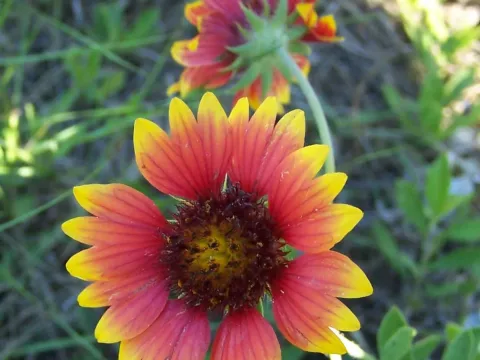
Gaillardia
Gaillardia Foug.
Gaillardia (Gaillardia Foug.) is a genus of flowering plants in the Asteraceae family. It is widely grown for its drought tolerance and vibrant, multi-colored blooms.
What the section contains


Gaillardia
Sowing in greenhouse conditions typically begins in early spring, 6 to 8 weeks before the last frost. Seeds are placed on the surface of a light, sterile growing medium.
For direct sowing, the soil must be well-warmed and prepared. Seeds should be sown in rows with enough spacing to ensure proper airflow between the mature plants.
Germination usually takes 14 to 21 days under warm conditions. Keeping the substrate consistently moist but not waterlogged is critical during the initial development phase.
Young plants are often transplanted to their final location once the threat of frost has passed. Hardening off is necessary to prevent transplant shock in the field.
Gaillardia thrives in full sun conditions. Providing at least 6 to 8 hours of direct sunlight daily is essential for maintaining strong stems and intense flower coloration.
The plant requires well-drained, sandy, or loamy soil. It is highly intolerant of wet, heavy soils, which often lead to root rot during cold or rainy periods.
Once established, the plant is remarkably drought-tolerant. Deep, infrequent watering is preferable to light, daily irrigation, as it encourages a deeper root system.
Soil fertility should be kept at a moderate level. Over-fertilization can result in lush foliage growth at the expense of flower production, making the plant weaker.
Regular maintenance includes deadheading faded flowers, which promotes continuous blooming throughout the growing season and prevents unwanted self-seeding in unwanted areas.
Powdery mildew is the most significant pathological threat to Gaillardia. It appears as a white, powdery coating on leaves, usually favored by high humidity and poor airflow.
Root rot and crown rot are common if the soil drainage is inadequate. These fungal issues are difficult to treat, making prevention through soil management the priority.
Pests like aphids and whiteflies can infest the plants, causing distorted growth and acting as vectors for plant viruses. Early identification is crucial for effective control.
Integrated pest management strategies are recommended. This includes encouraging natural predators and using selective, low-toxicity insecticides when an infestation exceeds the threshold.
Maintaining a clean planting environment by removing dead plant material helps to reduce the inoculum of soil-borne diseases for the following season.