
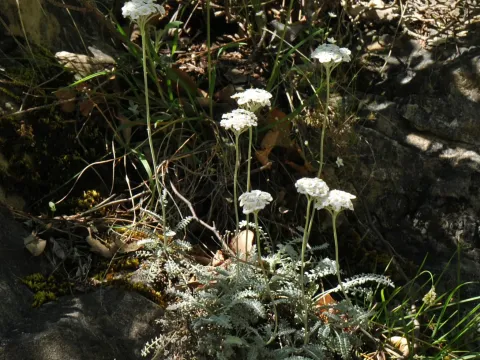
Fraas' yarrow
Achillea fraasii
Fraas' yarrow (Achillea fraasii) is a perennial herbaceous plant belonging to the Asteraceae family. Native to the Balkan Peninsula, this species is well-adapted to rocky and arid environments, making it a robust candidate for cultivation in regions with similar climate conditions.
What the section contains
Fraas' yarrow
The plant thrives in full sun and requires well-drained, sandy or loamy soils to prevent root rot. It is classified as a xerophyte, which means it is highly efficient at managing water resources and can withstand prolonged periods of drought once established in the field.
Agronomic management of Achillea fraasii includes ensuring adequate spacing to promote airflow, which is critical for reducing humidity levels around the foliage. This practice significantly minimizes the risk of fungal infections that are common in dense plant stands.
Regarding soil fertility, Fraas' yarrow does not demand high nitrogen inputs. In fact, excessive fertilization may lead to rapid, succulent growth that is more susceptible to environmental stress and pests, while simultaneously decreasing the quality of the essential oils produced.
In terms of economic utility, this crop is primarily grown for its secondary metabolites. Its essential oils and bioactive compounds are in demand for natural cosmetic formulations and herbal medicinal products, providing a sustainable income source for specialty herb growers.
Common agricultural challenges include powdery mildew, which can occur during humid summers, and root rot caused by poor soil drainage. Integrated pest management strategies are recommended to control aphids, which may cluster on flowering stems during the peak growth phase.