
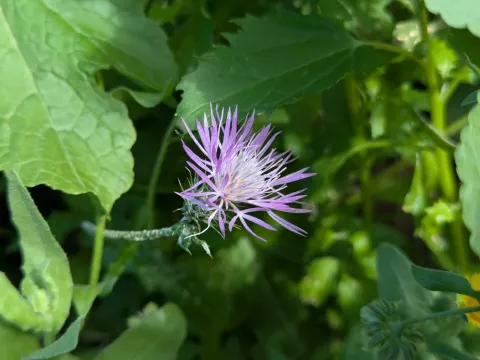
Galactites
Galactites
Galactites tomentosa is primarily propagated by seeds, which exhibit high viability and rapid germination under suitable conditions.
What the section contains


Galactites
In Mediterranean climates, seeds usually germinate during the autumn months, following the first significant rainfall of the season.
For agricultural purposes, seeds should be sown at a shallow depth of approximately 1–2 centimeters to ensure proper germination and establishment.
The plant has a strong tendency for self-seeding, which can lead to rapid spread if not carefully managed within the cropping area.
Spacing should be adequate to prevent overcrowding, which can otherwise lead to increased competition for soil nutrients and light.
As a member of the Asteraceae family, Galactites thrives in open, sunny environments with well-draining soil structures.
The plant is highly resilient and adaptable to various soil types, particularly favoring calcareous and loamy soils typical of its native range.
It possesses significant drought tolerance, which allows it to persist in arid regions where other plant species might struggle to survive.
While tolerant of low fertility, optimal growth is observed in soils with sufficient mineral content and proper aeration.
Consistent airflow is critical, as it mitigates the risk of moisture-related diseases that can affect the foliage during the growth cycle.
Galactites is rarely cultivated as a primary crop; it is more frequently encountered as a wild plant or a managed component of natural landscapes.
In certain traditional contexts, young leaves are harvested for culinary uses, although the spiny nature of the plant requires careful handling.
Its potential use as forage is limited due to the prickly bracts that surround the flower heads, making it unpalatable to most livestock.
Current research investigates the plant's phytochemical composition for potential pharmaceutical and nutraceutical applications.
Yield estimation is generally focused on biomass production in areas where it grows naturally, rather than intensive cultivation practices.
Fungal pathogens represent the most significant threat to Galactites, especially during seasons with prolonged wet conditions and high humidity.
Pests such as aphids and specialized coleoptera can cause damage to the developing flower buds, reducing the overall vitality of the plant.
Root rot is a common issue in waterlogged soils, which can lead to rapid decline and mortality of the individual plants.
Competition from more aggressive plant species can suppress the growth of Galactites during its early seedling development stage.
Integrated pest management, including mechanical removal and rotation, is the preferred method for controlling its spread in agricultural lands.
Harvesting of aerial parts, when required for study or medicinal use, is best performed during the peak flowering stage for maximum efficacy.
Protective equipment, specifically thick gloves, is essential when handling the plant to avoid injury from its sharp, spiny appendages.
Post-harvest processing involves drying the plant material in well-ventilated, shaded areas to preserve the integrity of its chemical constituents.
When treated as a weed, timely mowing before seed set is critical to prevent the dissemination of seeds across the field.
Proper storage of the harvested material in moisture-proof containers is necessary to prevent spoilage and contamination by mold.