
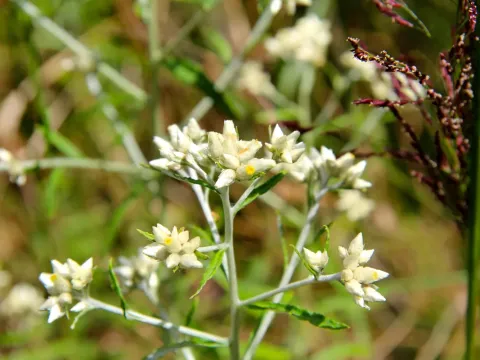
Fragrant cudweed
Gnaphalium polycephalum
Fragrant cudweed (Pseudognaphalium obtusifolium) is a warm-season crop. In temperate climates, sowing should be conducted in spring once soil temperatures have consistently risen, typically in late April or May.
What the section contains
Fragrant cudweed
To ensure uniform germination, seeds may require stratification or warming if they were stored in cool conditions. Sowing is usually performed by surface scattering or minimal soil coverage, as the tiny seeds require light to trigger germination.
An optimal planting layout involves row spacing of 45 to 60 centimeters, allowing for mechanical weed control during the early stages of vegetation. Since the plant develops slowly in its first year, forming only a leaf rosette, maintaining weed-free fields is essential.
While dormant autumn sowing is possible in warmer regions, it requires precise timing to prevent seeds from germinating before the onset of harsh frost, which would be fatal to the young sprouts.
The seeding rate should be adjusted based on seed viability tests, which are highly recommended due to the potential for variable germination rates in this species.
This member of the Asteraceae family originates from North American open spaces and thrives in well-drained, sandy, or loamy soils. It is highly adapted to dry conditions but requires moderate moisture during the active stem-growth phase for high-quality yields.
The plant prefers neutral to slightly acidic soil conditions; waterlogging or poor drainage are detrimental to its root system and can lead to immediate crop loss.
Direct sunlight is critical for the accumulation of essential oils and flavonoids in the aerial parts, so fields must be situated in fully exposed areas without overhead shading.
Fertilization should be handled with caution; excessive nitrogen promotes rapid vegetative growth that can diminish the quality of medicinal raw material and reduce the plant's winter hardiness.
Careful site selection, focusing on light soil textures and excellent drainage, is the foundation for successfully cultivating this aromatic crop in a field setting.
The yield of fragrant cudweed depends on management quality and climatic conditions, typically ranging from 1 to 2 tonnes of dry raw material per hectare under intensive cultivation practices.
Maximum biomass production is usually achieved in the second and third year of vegetation, once the plant has formed a robust root system and a significant number of flowering stalks.
Plant density is a key performance indicator, with an optimal population of 150,000 to 200,000 plants per hectare ensuring efficient use of land and resource allocation.
Harvesting is conducted during the peak flowering stage to ensure the highest concentration of bioactive compounds, meeting strictly regulated pharmacological standards.
Post-harvest processing involves rapid drying at temperatures not exceeding 40-45 degrees Celsius, preserving the plant's structural integrity and chemical potency for pharmaceutical use.
While the plant's strong fragrance acts as a natural deterrent to many insects, monoculture fields are susceptible to aphid infestations, which can sap energy from developing shoots during the growth season.
Powdery mildew may occur in conditions of high humidity and poor air circulation within the rows, necessitating timely thinning and the use of copper or sulfur-based preventive treatments.
Root rot caused by poor water management and saturated soil is a severe risk, capable of destroying significant portions of the plantation in a short period.
Weed control is the primary challenge during the establishment phase, as the plant's slow initial growth leaves it vulnerable to competition from more aggressive weeds.
An integrated pest management approach, including regular mechanical cultivation and mulching, is recommended to minimize reliance on synthetic chemical pesticides.
Harvesting is performed by cutting the aerial parts of the plant at a height of 5-10 centimeters above the soil line using specialized sickle bar mowers or hand-cutting tools.
The ideal harvest time is during dry weather, after morning dew has evaporated, to prevent moisture accumulation which could lead to rapid spoilage and a decrease in raw material quality.
Cut material should be transported to the drying facility immediately to avoid prolonged exposure to direct sunlight, which can fade the colors and degrade the botanical components.
Drying occurs in well-ventilated sheds or professional drying chambers, ensuring moisture is removed until the stems become brittle enough to snap cleanly when bent.
Once dried, the raw material is sorted, screened for impurities, and packed into breathable paper bags for secure transport and long-term storage in cool, dry environments.