
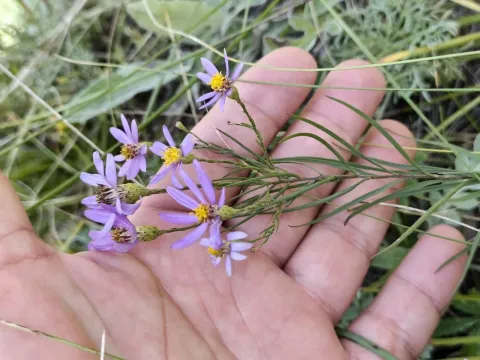
Galatella angustissima
Galatella angustissima
Galatella angustissima is a perennial herbaceous plant belonging to the Asteraceae family. It is natively distributed across the Eurasian steppe regions, where it thrives in open, high-light environments.
What the section contains
Galatella angustissima
Botanically, it is distinguished by its narrow, lanceolate leaves and terminal inflorescences. Its root structure is deep, allowing the plant to reach moisture reserves during prolonged droughts, making it a highly resilient species.
This crop demands well-drained soil with a low to moderate organic matter content. It performs exceptionally well in sandy or rocky soils where other more demanding crops would fail due to excessive moisture retention.
Climatic requirements focus on high solar radiation. Galatella angustissima requires an open position to maximize photosynthesis; it does not tolerate shade, which leads to etiolation and weak stem development.
Agrotechnical management involves minimal soil disturbance once the plant is established. It is an excellent candidate for sustainable land management in arid zones where irrigation is not feasible.
The plant is generally resistant to standard agricultural pests. However, in poorly drained or overly humid soil conditions, it is susceptible to root rot, which can destroy the root crown rapidly.
Foliar diseases such as powdery mildew are the most common threats during seasons with high humidity and stagnant air. Proper spacing and airflow are the primary methods of preventing these issues.
Insects like aphids may target the succulent growing tips of the stems, especially during dry spells when the plant's natural defenses are slightly lowered due to metabolic stress.
Another potential issue is the presence of meadow moths or larvae that consume leaf tissue, though infestations are typically sporadic and rarely cause total crop failure in healthy populations.
Effective management includes maintaining a clean field border to avoid the migration of pests from wild grasses and regular monitoring during the flowering phase to ensure seed health.