
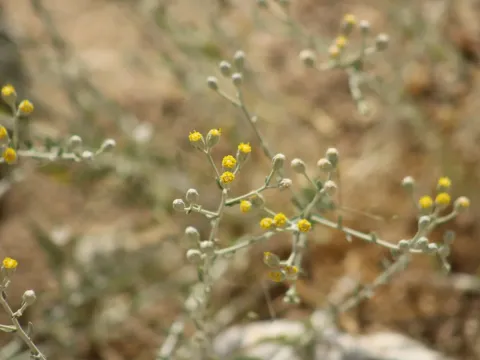
Fragrant yarrow
Achillea fragrantissima
Sowing of fragrant yarrow is mainly carried out in spring, when the soil warms up to 10–12°C. In commercial scales, both direct seeding into the soil at a depth of no more than 0.5–1 cm and the seedling method are used to ensure higher germination rates under controlled conditions.
What the section contains
Fragrant yarrow
When sowing in open ground, it is important to ensure shallow covering of the seeds, as they are extremely light-sensitive and require surface placement. The use of pelleted seeds significantly improves the uniformity of sowing and reduces the consumption rate of material per hectare.
For establishing long-term plantations, optimal sowing times are early spring or late summer, when temperatures allow the plant to root before extreme weather conditions occur. It is crucial to prevent the topsoil from drying out during the germination period.
Planting density varies depending on the chosen harvesting method but usually ranges from 60,000 to 80,000 plants per hectare. Row spacing should be at least 50–60 cm to allow for efficient inter-row cultivation and weed control.
Using mulch during planting helps protect seedlings from overheating and suppresses weed activity during the early growth stages, which is critical for the slow-developing seedlings of this crop.
Achillea fragrantissima is a drought-tolerant plant originating from the arid zones of the Middle East. The crop prefers well-drained, calcareous, or stony soils with low organic matter content, making it an excellent candidate for utilizing marginal, low-productivity lands.
The plant is highly sensitive to excessive moisture and waterlogging, so it is necessary to avoid lowlands and heavy clay soils when selecting a site. The best results are achieved when grown in open, sunny areas with good soil aeration.
The temperature range for successful vegetation is between 20°C and 30°C. The plant has high frost resistance; however, during snowless winters with strong winds, it may require minimal protective coverage in the first few years after field establishment.
The crop has modest soil fertility requirements but responds well to moderate doses of phosphorus and potassium fertilizers. An excess of nitrogen leads to rapid vegetative growth at the expense of essential oil accumulation, which is the primary economic goal of cultivation.
An important success factor is adherence to lighting requirements. In conditions of limited sunlight, the concentration of biologically active compounds in the aerial part of the plant decreases sharply, which negatively affects the quality of the final raw material.
The yield of fragrant yarrow depends on plant density, plantation age, and regional climatic conditions. On average, commercial productivity ranges from 1.5 to 3 tons of dry mass per hectare when all agrotechnical regulations are followed.
Maximum yield indicators are achieved during the 2nd and 3rd year of the crop's life. It is important to note that the flower raw material is the most valuable part, so the primary task of the agronomist is to stimulate abundant blooming.
Raw material is harvested during the period of mass flowering, when the concentration of aromatic compounds reaches its peak. A single harvest per season allows the plant to recover and prepare for wintering, ensuring the longevity of the plantation.
In industrial cultivation, mechanized harvesting is possible using combine harvesters adapted for the needs of essential oil production. The cutting height should leave a sufficient amount of basal leaves to ensure photosynthesis.
Post-harvest processing includes mandatory drying in the shade or in industrial dryers at temperatures not exceeding 40°C to preserve volatile essential oils. Overheating the raw material leads to loss of quality and a decrease in the market value of the produce.
The crop possesses high disease resistance due to the presence of specific terpenes and essential oils in its composition. However, when drainage is compromised, infections by root rots caused by pathogenic fungi from the genera Pythium and Phytophthora are possible.
Under high humidity conditions, powdery mildew can develop, manifesting as a characteristic white coating on the leaf blades. Timely thinning of plantings and ensuring proper air circulation are the best prevention methods.
Among pests, aphids and certain types of plant hoppers are the most dangerous as they can suck sap from young shoots, weakening the plant. In case of massive outbreaks, the use of biological preparations based on entomopathogenic fungi is recommended.
Root pests, such as wireworms, can damage the underground parts in the first months after planting. Monitoring pest populations before establishing the plantation is a mandatory step in field preparation.
The use of pesticides on yarrow plantations is limited as the raw material is often destined for the food and pharmaceutical industries. Preference is always given to agrotechnical and biological methods of pathogen control.
Harvesting is conducted exclusively in dry, sunny weather in the middle of the day, when air humidity is at its minimum. This ensures the maximum content of essential oils in the inflorescences and prevents raw material spoilage during drying.
The cut mass must be delivered to the site of primary processing or drying as quickly as possible. Prolonged storage of mown material in swaths or piles leads to self-heating and irreversible loss of product quality.
The harvesting technology involves the use of specialized headers capable of cutting inflorescences together with the upper part of the stem. The purity of the harvested material must meet industry standards, excluding soil and foreign impurities.
To obtain high-quality essential oil, it is advisable to conduct steam distillation of freshly harvested raw material as soon as possible after collection. This allows for the extraction of volatile components with minimal losses.
Plant residues after harvesting can be used as mulch or sent for composting. In specialized farms, shredding of crop residues is practiced to return organic matter to the soil.