
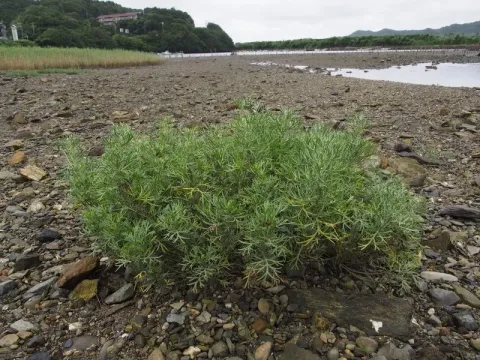
Fukudo wormwood
Artemisia fukudo
Fukudo wormwood (Artemisia fukudo) is a perennial herbaceous plant belonging to the Asteraceae family. In nature, the seeds mature in autumn, so sowing before winter is recommended to allow for natural stratification.
What the section contains
Fukudo wormwood
For spring planting, seeds require preparation to improve germination rates. Sowing should occur early in the season once soil temperatures reach 5-8 degrees Celsius to ensure successful establishment.
Large-scale cultivation utilizes wide-row sowing methods. This technique provides optimal spacing for individual plants, reducing competition and facilitating mechanical weed control between rows.
The seeds are small and should be planted at a shallow depth of approximately 0.5-1 centimeter. Consistent soil moisture is essential during the early stages until the seedlings become firmly rooted.
Transplanting seedlings started in greenhouses about 40-50 days before the frost-free date can significantly improve crop uniformity and overall biomass production in the first growing season.
This crop is highly heliophilic and thrives in full sunlight. Areas with significant shading should be avoided, as low light intensity leads to legginess and lower concentrations of essential oils.
Artemisia fukudo prefers well-drained sandy or sandy loam soils. It exhibits notable salt tolerance, making it a viable candidate for cultivation in coastal regions with saline-affected soils.
The plant is adapted to dune conditions and cannot tolerate waterlogged soils. Maintaining excellent drainage is paramount for plant health and preventing root-related complications.
Moderate nitrogen application supports vigorous leaf growth, which is critical for biomass harvesting. However, excessive fertilization should be avoided to preserve the delicate chemical profile of the plant.
Thanks to a robust root system, Fukudo wormwood is relatively drought-tolerant. Nevertheless, supplementary irrigation during extreme dry spells can substantially boost total yield and crop quality.
Biomass yield depends largely on planting density and the soil's fertility status. With proper management, the plant can produce multiple cuts per growing season, increasing total productivity.
The primary value lies in the aerial parts of the plant, which are harvested for pharmaceutical and cosmetic applications. Dry matter yield is typically between 20-25% of fresh weight.
Utilizing high-quality, stable genotypes allows for consistent yields over several years. A well-established plantation can remain productive for 3-5 years before requiring renewal.
Early-stage weed management is crucial for maximizing yield. If left uncontrolled, weeds can easily outcompete the young wormwood plants, leading to significant biomass reduction.
Mechanized harvesting with specialized herb cutters improves efficiency and reduces harvest losses, leading to a better economic return on the cultivated acreage.
Fukudo wormwood possesses natural phytoncide properties, providing inherent resistance to many common fungal pathogens. However, high humidity may occasionally lead to powdery mildew outbreaks.
Aphids and spider mites are the most common pests affecting this crop, particularly targeting the tender new growth. Regular scouting is required to detect early signs of infestation.
Biological pest control methods are preferred, especially given the plant's end use in natural skincare and health products. Harsh chemical pesticides are generally avoided to ensure product purity.
Root rot occurs primarily in soils with poor aeration or drainage. Proper site selection and crop rotation remain the most effective preventive measures against soil-borne pathogens.
- Monitor leaf undersides regularly for mite and aphid colonies.
- Ensure adequate spacing to promote airflow and reduce moisture accumulation.
- Remove any plants exhibiting signs of decay or stress immediately.
Harvesting is ideally performed during the peak flowering stage. This is when the concentration of essential oils is at its maximum, ensuring high-quality raw material for industrial processing.
The plants are cut at a height of 10-15 centimeters above the ground. This preserves the root crown and encourages rapid regrowth, facilitating multiple harvests throughout the season.
Post-harvest handling must be swift to prevent heat build-up. Fresh biomass should be moved to the processing facility immediately to avoid the loss of volatile compounds due to fermentation.
Drying should be conducted in well-ventilated areas at temperatures not exceeding 40 degrees Celsius. Higher temperatures may damage the delicate essential oil components and active compounds.
Once dried, the product should be stored in a cool, dry, and dark environment to maintain its aromatic properties. Protecting the material from moisture and pests is essential for quality control.