
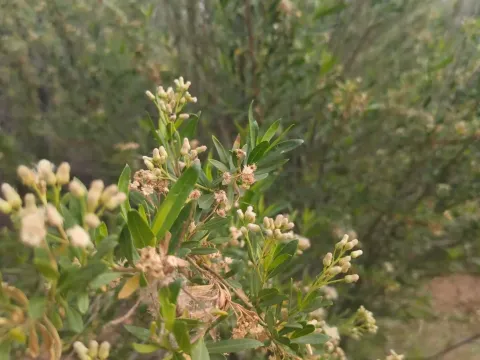
Willow baccharis
Baccharis salicina
Willow baccharis (Baccharis salicina) is a resilient shrub belonging to the Asteraceae family, native to the riparian zones and plains of North America.
What the section contains
Willow baccharis
This species is highly valued for its ability to thrive in harsh environments, including sites with poor soil quality, high salinity, and limited water availability.
The plant requires full sun exposure to maintain its structural integrity and produce abundant foliage, making it ideal for large open landscape projects.
In terms of soil, it prefers sandy or well-drained substrates. Its root system is exceptionally effective at stabilizing soil, which helps prevent erosion in disturbed areas.
Maintenance is minimal once the plant is established. Supplemental irrigation is only necessary during the first year of growth or in cases of extreme, prolonged drought.
The main pests affecting willow baccharis include aphids and spider mites, which can cause leaf yellowing and reduce the overall vigor of the shrub.
Fungal infections, such as powdery mildew, may occur if the plants are placed in areas with poor airflow and high humidity during the growing season.
Root rot is typically only an issue in waterlogged soils, as the plant is not adapted to thrive in constant saturation.
Integrated pest management (IPM) is recommended, focusing on maintaining plant health and removing localized outbreaks before they spread.
Regular monitoring of the foliage and stem base is essential to detect pest activity early, particularly during the dry summer months.