
Willkomm's Aster
Aster willkommii
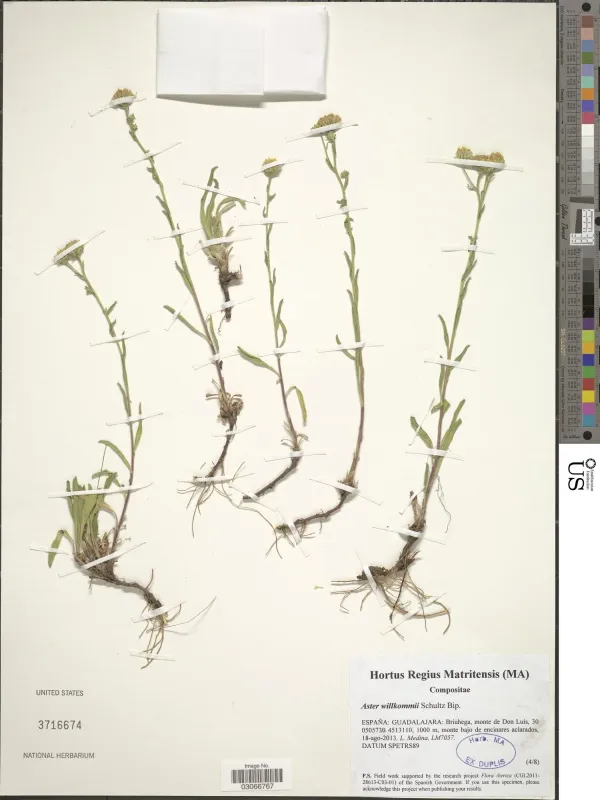
Description
Sowing dates
Willkomm's Aster is a perennial plant that is commonly propagated by seeds, which can be sown either in containers indoors or directly in the garden soil.
When starting from seeds, it is beneficial to stratify them in a cold environment to break dormancy and ensure a uniform and successful germination rate.
Seedlings should be thinned or transplanted into individual pots once they develop their first set of true leaves to prevent crowding and competition.
Hardening off the plants is a crucial step before moving them to their permanent outdoor location to help them adapt to ambient sunlight and temperature changes.
Direct sowing in the garden is best performed in early spring or late autumn, ensuring the seeds have adequate contact with the prepared, moist soil surface.
Growing requirements
As a member of the Asteraceae family, Aster willkommii thrives in locations with full sun exposure and well-draining, nutrient-rich soil compositions.
While this plant is moderately drought-tolerant once established, providing consistent watering during the peak growing season encourages optimal flower production.
It prefers slightly alkaline to neutral soil pH levels and performs exceptionally well in garden borders where air circulation is maintained at a high level.
Regular maintenance, such as deadheading spent flowers, helps redirect the plant's energy into root development and potential secondary flushes of blooms.
Mulching around the base of the plant is recommended to regulate soil temperature and minimize competition from opportunistic weeds during the summer months.
Main diseases and pests
Powdery mildew is the most prevalent fungal disease, particularly when high humidity levels coincide with poor ventilation in densely planted areas.
Root rot can become an issue if the plant is situated in waterlogged or heavy clay soil, making proper drainage design a fundamental aspect of its care.
Pests like aphids and spider mites can occasionally damage the succulent growth tips, necessitating frequent inspections during the warmer periods of spring.
Implementing integrated pest management practices, such as encouraging beneficial insects, helps keep common garden pest populations within a manageable threshold.
Sanitation practices, including removing fallen leaves and debris in the autumn, are effective strategies to reduce the overwintering capacity of plant pathogens.
Harvesting
Harvesting for Willkomm's Aster is primarily concerned with collecting mature seeds or cutting stems for ornamental floral arrangements throughout the season.
When gathering seeds, it is important to wait until the flower heads are completely dry on the stalk to ensure the seeds have reached full maturity.
For cut flowers, harvest in the early morning when the blooms are fully hydrated, placing them immediately into clean water to maximize their vase life.
Seasonal cutbacks in late autumn are essential for winterizing the garden, removing spent foliage down to the base to protect the crown from excess moisture.
Properly disposed of plant waste, especially if any disease signs were present, ensures a cleaner and healthier growing environment for the next year.