
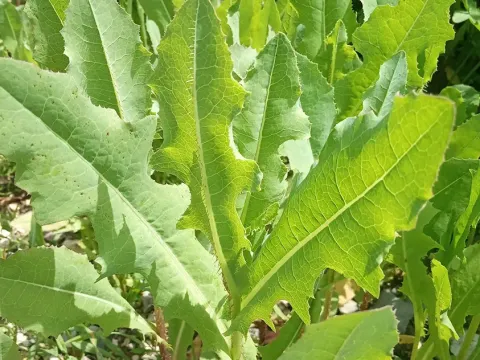
Wild lettuce
Lactuca virosa
Wild lettuce (Lactuca virosa) is a biennial plant species in the Asteraceae family. Often cultivated for its medicinal properties, it typically forms a low rosette of leaves in its first year and produces a tall, branched stem in its second year of growth.
What the section contains
Wild lettuce
Sowing should take place in early spring once the threat of heavy frost has passed. The seeds are small and require a finely prepared, weed-free seedbed to ensure successful germination, which usually occurs within two weeks under temperate conditions.
The seeds should be sown in rows spaced 40 to 50 cm apart to allow for proper airflow. Because the seeds are light-sensitive, they should be covered with only a very thin layer of fine soil or compost to prevent them from drying out before they germinate.
Once the seedlings are established, they must be thinned to a spacing of approximately 25-30 cm between individual plants. This spacing prevents overcrowding, which is a common cause of fungal diseases in damp weather conditions.
For commercial production, direct seeding into the field is the most common practice. However, greenhouse-grown plugs can be used in colder climates to provide an earlier start and to ensure a more uniform crop stand.
The cultivation of Lactuca virosa requires a site with full sun exposure, as high solar radiation is essential for the plant to develop its characteristic chemical composition. A sunny location is crucial for maximizing the production of the milky sap, known as lactucarium.
The plant performs best in fertile, well-draining soils with a neutral to slightly alkaline pH. While it is adaptable to various soil types, waterlogged conditions should be strictly avoided to prevent root rot and stunted development.
Consistent soil moisture is required during the vegetative phase. Irrigation management is critical; while the plant is somewhat hardy, prolonged drought will force the plant to "bolt" or enter its flowering stage prematurely, which diminishes the quality of the foliage.
Regarding soil fertility, a balanced supply of nitrogen is necessary to promote vigorous leaf growth. However, excessive fertilization can lead to overly lush, succulent leaves that are more prone to pests and less potent in terms of medicinal value.
Proper weed management is essential during the early stages of plant growth. Because wild lettuce grows relatively slowly at the start, competition from faster-growing weeds can significantly reduce yield and crop quality.
Like many species in the Lactuca genus, wild lettuce is susceptible to various pests, with aphids being the most common. These insects feed on the plant's sap and can act as vectors for various viral diseases that stunt growth.
Powdery mildew is a significant threat, particularly in humid or stagnant air environments. Good crop spacing and proper sanitation practices help minimize the risk of infection by ensuring adequate circulation throughout the field.
Slug and snail infestations can be highly destructive, especially to young seedlings. Integrated pest management, including physical barriers or targeted baiting, is often necessary during the early spring months when populations are highest.
Root-knot nematodes can also be a problem if the same land is used for continuous cropping of Asteraceae family plants. Implementing a proper crop rotation plan is essential to break the life cycles of soil-borne pathogens.
In cases of severe infestation, growers must rely on approved agricultural practices that prioritize the safety of the harvested product, as the medicinal nature of the crop limits the use of certain chemical insecticides.
The harvest phase is the most critical stage for wild lettuce production. The foliage and the flowering tops should be harvested just as the plant begins to bloom, as the concentration of the bioactive sap is at its peak during this specific time.
Manual harvesting is common for high-quality production. The entire plant is often cut near the base, or leaves are collected systematically. The milky white sap is collected by scoring the main stem, allowing the latex to exude and solidify before it is scraped off.
Post-harvest handling requires rapid drying to prevent fermentation or mold growth. Drying should occur in a dark, climate-controlled environment at temperatures not exceeding 40 degrees Celsius to preserve the integrity of the secondary metabolites.
Once dried, the plant material should be milled or stored in airtight, moisture-proof containers. Exposure to heat and light should be strictly avoided to ensure the long-term stability and efficacy of the final product.
Proper record-keeping during the harvest, including dates and moisture content analysis, is vital for maintaining high quality and ensuring that the batch meets the standards required for herbal and pharmaceutical applications.